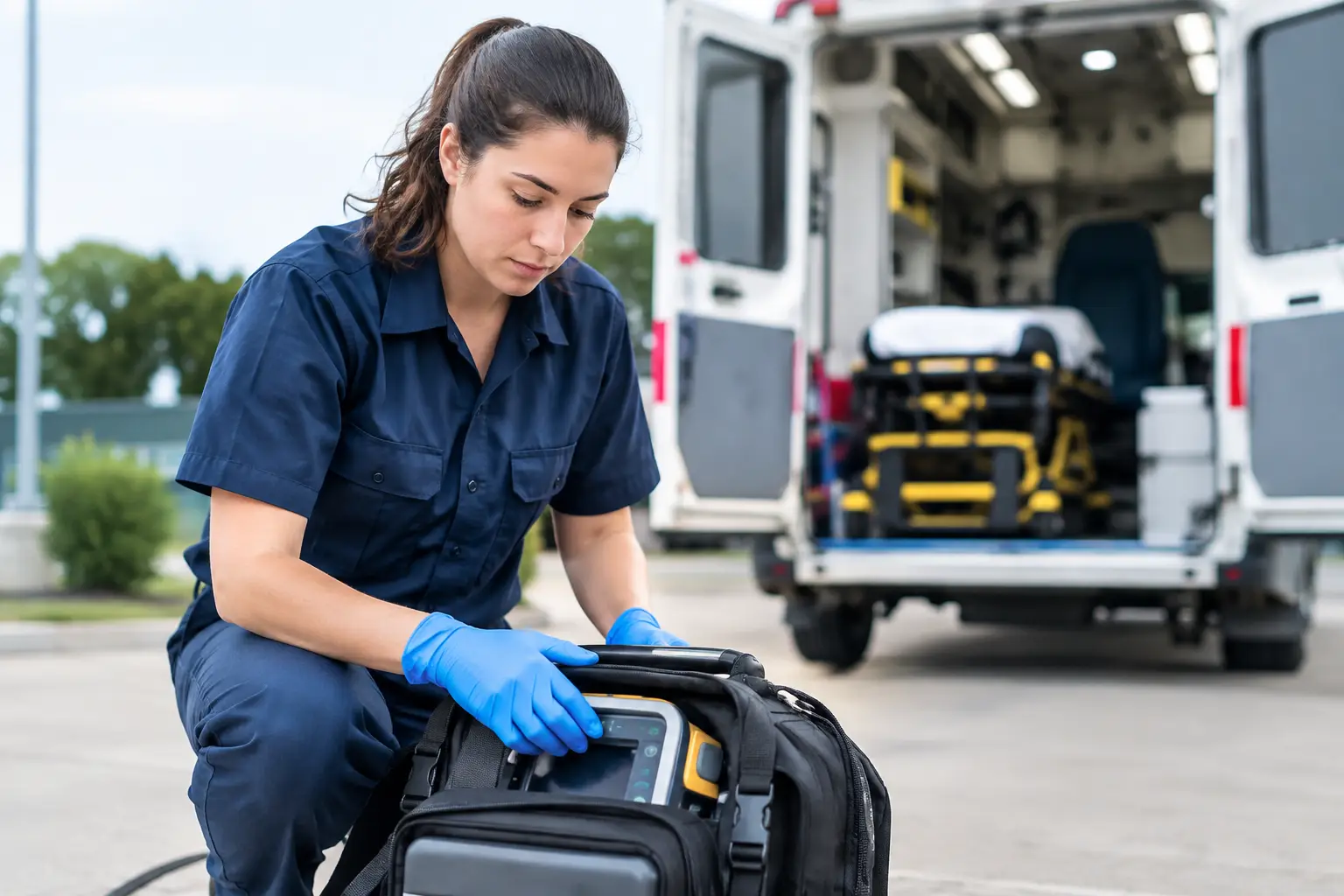
A clinical shift can feel very different from practicing skills in a controlled lab. The ambulance is moving, the crew has established routines, patients are having real emergencies, and every decision affects care. This ambulance clinical preparation guide helps EMT students arrive ready to learn, contribute appropriately, and build the confidence required for field work.
Clinical time is not simply a requirement to complete before certification. It is where classroom knowledge, hands-on skills, communication, and professional judgment begin to work together. A prepared student can focus less on uncertainty and more on becoming the calm, capable responder patients and partners need.
What Clinical Preparation Really Means
Preparation begins before you step into the station. You should understand the purpose of your assigned shift, know the expectations of your program and clinical site, and arrive with the equipment and documentation materials you are permitted to use. It also means recognizing your role as a student. You are there to observe, assist within your authorized scope, ask thoughtful questions, and accept direction from the crew.
Every ambulance service operates with its own policies, equipment layout, dispatch procedures, and culture. Your EMT education teaches foundational standards, but the clinical environment teaches you how those standards are applied by a real agency serving a real community. Stay flexible without losing sight of the safe, patient-centered principles you have learned.
Confirm the Details Before Your Shift
Do not wait until the morning of your clinical shift to look for directions, paperwork, or uniform requirements. Confirm your reporting time, station location, parking instructions, required identification, and contact information in advance. Plan to arrive early enough to introduce yourself without interrupting the crew’s readiness process.
Review your program’s clinical policies as well. Know how hours are tracked, what patient contacts or skills must be documented, who approves your records, and what to do if you must miss a shift. Accurate documentation protects your progress and shows that you can meet the professional responsibilities expected in EMS.
Prepare Your Uniform, Gear, and Mindset
A professional appearance tells your preceptor, partner, and patients that you take the opportunity seriously. Wear the approved uniform, keep it clean and functional, and choose footwear that is closed-toe, durable, and safe for lifting, stairs, weather, and long periods on your feet. Keep jewelry, fragrances, and distractions to a minimum.
Bring the basics required by your program, such as your photo identification, required clinical paperwork, pen, small notebook, watch, water, and meal if the site permits it. Avoid bringing unnecessary valuables. Your clinical site may have restrictions on bags, phones, photography, and personal devices, especially around patient care areas.
Your mental preparation matters just as much. Get adequate rest, eat before the shift, and plan transportation that will not leave you rushing or distracted. EMS calls can be slow, intense, emotionally difficult, or physically demanding. Starting tired and unprepared makes it harder to learn safely.
Review the Skills You Are Most Likely to See
You do not need to memorize every possible protocol before a clinical shift. You do need a working command of the patient assessment process and the skills appropriate to your current level of training. Review primary assessment priorities, vital signs, oxygen and ventilation concepts, bleeding control, patient movement, communication, and documentation basics.
Also revisit the difference between knowing a skill and performing it in the field. A skill station may be quiet and predictable. On an ambulance, space may be limited, the patient may be anxious or confused, family members may be present, and the crew may need to make rapid decisions. Your job is not to perform perfectly on demand. Your job is to remain observant, receptive, and safe.
If your preceptor offers you a task, listen fully before acting. Repeat key instructions when appropriate, ask for clarification if you are unsure, and stay within the limits established by your training level, preceptor, agency policy, and Texas requirements. Confidence is valuable in EMS, but overconfidence can compromise patient care.
Build Trust With Your Preceptor and Crew
The strongest clinical experiences begin with a respectful introduction. When you arrive, state your name, training level, school or program, and what you hope to gain from the shift. A simple introduction helps the crew understand how to involve you and what level of supervision you need.
Then pay attention. Notice how the crew checks equipment, communicates with dispatch, approaches scenes, divides responsibilities, and speaks with patients. Ask questions at appropriate times, not while a crew member is managing an airway, administering care, or communicating critical information.
A good rule is to be useful without becoming intrusive. Offer to help clean and restock after calls, carry equipment when directed, prepare the stretcher, or organize supplies. These tasks may seem basic, but they teach operational awareness and show that you understand EMS is a team profession.
Ask for Feedback You Can Use
Do not wait until the end of the shift to find out how you are doing. After a call, when the crew has completed patient transfer and has time to talk, ask one focused question. For example: What was the priority in that assessment? What should I watch for next time? How could I communicate more clearly?
Specific feedback is easier to apply than a general request for advice. Write down lessons after the call if permitted, while details are fresh. Over time, those notes can reveal patterns in your learning, such as needing more practice with vital signs, scene size-up, radio communication, or patient handoff reports.
Put Patient Privacy and Respect First
Clinical students have access to sensitive moments in people’s lives. Patients may be sick, injured, frightened, intoxicated, grieving, or unable to speak for themselves. Treat every patient with dignity, regardless of the call type, neighborhood, diagnosis, or behavior.
Protect confidential information at all times. Do not discuss patient details with friends or family. Do not post about calls on social media, even if you remove a name. Do not take photographs or record information unless specifically authorized under site policy and your educational requirements. Patient privacy is not just a compliance issue. It is a core part of earning public trust.
Professional communication also includes how you speak around the crew. Avoid gossip, judgmental comments, and assumptions. Use respectful language, introduce yourself to patients when appropriate, and explain your student role honestly. Many patients are willing to let students participate when they understand that qualified EMS professionals are supervising care.
Learn From Every Type of Call
Students sometimes expect clinical shifts to be defined by dramatic trauma calls or critical medical emergencies. Those calls can be valuable, but routine calls often build the habits that make a responder dependable. A transfer, a fall, a behavioral health call, or a patient with chronic shortness of breath can teach assessment, empathy, lifting safety, communication, and documentation.
Pay attention to the entire call cycle: dispatch information, scene safety, initial patient contact, assessment, treatment decisions, movement to the ambulance, transport, handoff, report completion, cleaning, and restocking. The work between calls matters because readiness for the next patient begins immediately after the last one.
Some shifts may have few calls. That does not mean the shift was wasted. Use slower periods to learn the truck layout, review equipment with permission, ask about local protocols, practice professional conversation, and observe how experienced responders prepare for uncertainty.
Document Your Experience Accurately
Clinical documentation should be completed promptly and truthfully. Record only what you observed, performed, or were directly involved in, following your program’s process. Never estimate times, invent patient contacts, or claim a skill you did not complete.
If you are unsure how to document an encounter or whether an activity qualifies toward a requirement, ask your instructor or clinical coordinator. It is far easier to correct an entry right away than to resolve missing or inaccurate records later in your course.
Your documentation habits now can shape your professional habits later. EMS relies on clear records to support continuity of care, quality improvement, billing, legal accountability, and patient safety. Treat every clinical entry as practice for the responsibility you will carry in the field.
Turn Clinical Experience Into Career Readiness
After each shift, take ten minutes to reflect. Identify one thing you did well, one situation that challenged you, and one skill or topic to review before the next shift. This simple habit turns experience into measurable improvement.
At Texas Rescue Med, clinical preparation is part of a larger goal: helping students become capable, compassionate professionals who can meet certification expectations and serve their communities with confidence. Flexible coursework can help fit training around work and family, but clinical readiness still requires personal discipline, curiosity, and a commitment to the patient in front of you.
Your first clinical shift is not a test of whether you already know everything. It is an opportunity to practice showing up prepared, listening closely, and growing with every call. Those habits will follow you long after the student uniform comes off.