AEMT clinicals are where advanced skills stop being practice scenarios and become patient-centered care under supervision. If you are asking how AEMT clinicals work, the short answer is that you complete approved patient-care experiences in clinical and field settings, document what you did and observed, and demonstrate safe decision-making to qualified preceptors.
For many students, clinicals are also the point where the AEMT pathway feels real. You may have studied pharmacology, patient assessment, vascular access, and advanced airway concepts online or in class. Clinical rotations ask you to apply that knowledge while balancing communication, professionalism, patient privacy, and the fast pace of emergency care.
What AEMT Clinicals Are Designed to Teach
AEMT clinical experiences are supervised opportunities to care for real patients in an approved setting. They are not simply attendance hours. Your program and preceptor are evaluating whether you can function appropriately at the Advanced EMT level while recognizing the limits of your current authorization and training.
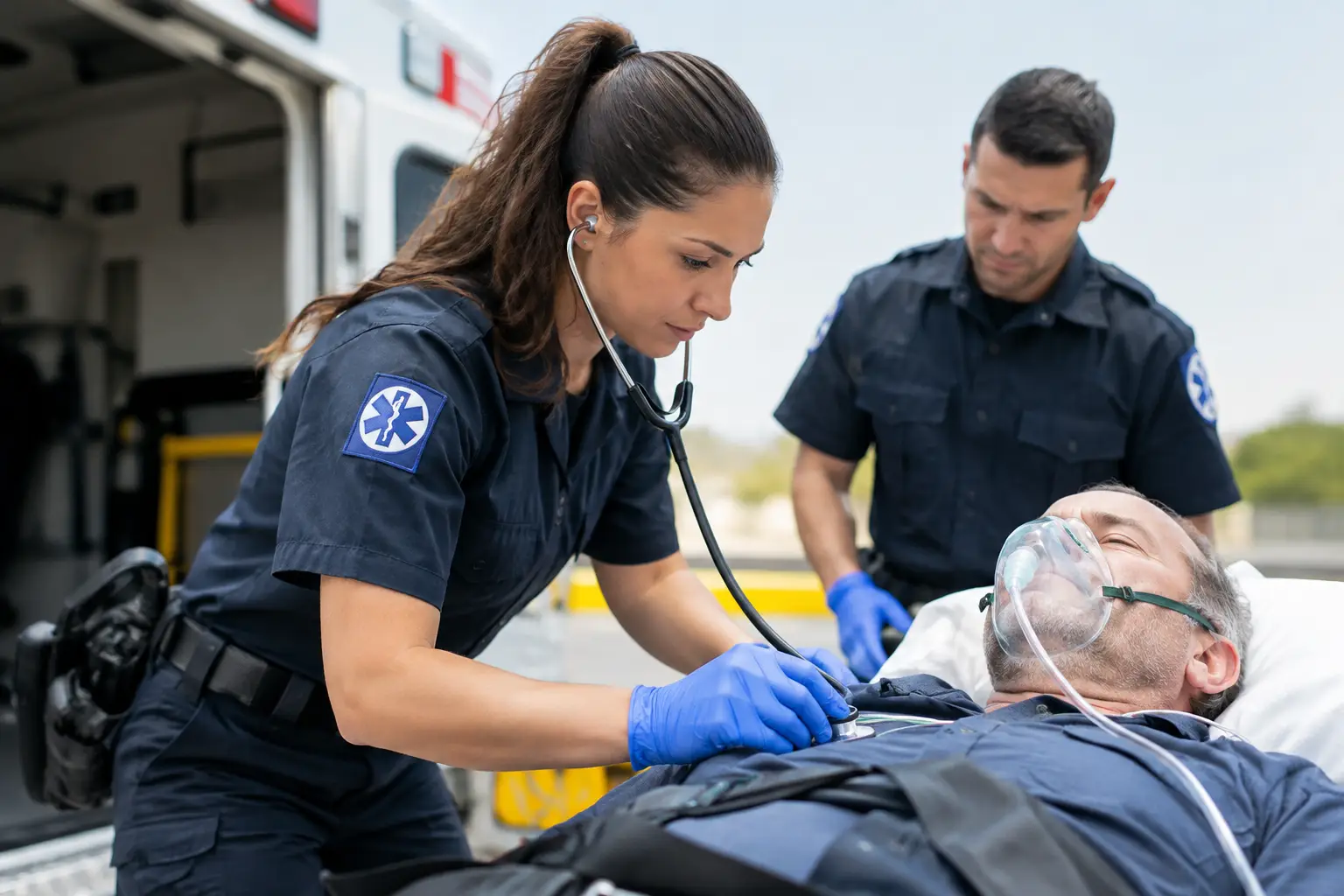
Depending on your program plan and available sites, you may complete clinical shifts in a hospital setting, an ambulance-based field internship, or both. Hospital experiences can expose you to emergency department flow, triage, medication administration, IV therapy, respiratory complaints, trauma care, and communication with nurses and physicians. Field shifts place you alongside EMS crews, where you see how assessments, treatments, transport decisions, and scene management work outside the hospital.
The goal is not to perform every skill on every shift. Real calls do not arrive on demand, and patient safety always comes first. The goal is to build sound clinical judgment through repeated exposure, supervised participation, and honest feedback.
How AEMT Clinicals Work From Start to Finish
Before a student begins clinical rotations, the program confirms that the student is ready for patient contact. That commonly includes completion of required coursework and skills training, along with site-specific onboarding items such as immunization records, background screening, drug testing, HIPAA training, and any required safety modules. Requirements vary by program, clinical site, and Texas regulations, so students should follow the instructions provided by their school rather than relying on another student’s checklist.
Once cleared, students schedule approved shifts through their program’s process. Flexibility matters, especially for adults balancing work, family responsibilities, or fire and EMS schedules. Still, clinical availability depends on partner-site capacity. Evening, weekend, and overnight shifts may provide valuable experience, but they are not automatically easier to secure.
At the start of each shift, introduce yourself to your preceptor, clarify your student role, and ask how they prefer to involve students. A strong first question is simple: “What can I do today that will be helpful to you and safe for the patient?” That approach shows professionalism and keeps the focus where it belongs.
During the shift, you may begin by observing. As your preceptor becomes familiar with your preparation and skill level, you may progress to participating in assessments, obtaining vital signs, gathering patient histories, assisting with treatments, practicing communication, and completing documentation. Any advanced intervention must be appropriate to your training, the setting’s policies, the patient’s condition, and the preceptor’s direction.
After the encounter, you record the experience in the program’s clinical tracking system or required documentation format. Your preceptor validates the entry when appropriate. Accurate documentation matters because it confirms more than attendance. It shows the types of patients you encountered, your level of participation, and whether you met the program’s clinical objectives.
Clinical Hours, Patient Contacts, and Competencies
Students often want a single answer to how many clinical hours or patient contacts they need. The honest answer is that it depends. AEMT programs must meet applicable education standards, and individual schools may set specific objectives for clinical time, patient encounters, age groups, chief complaints, assessments, and skill opportunities.
Some requirements focus on time spent in an approved setting. Others focus more heavily on documented patient contacts and demonstrated competencies. Many programs use a combination of both. A student who completes every scheduled hour but has limited participation may need additional opportunities. Likewise, a student who sees many patients still needs properly verified documentation and satisfactory performance.
This is why clinicals should not be treated as a box to check. Show up prepared, stay engaged, and ask for feedback after meaningful patient encounters. If you need more experience with a particular type of patient or assessment, tell your instructor early. Waiting until the final shift can limit your options.
What Counts as Meaningful Participation
Meaningful participation does not mean taking over patient care. It means contributing at the level your preceptor approves. For one patient, that may be performing a focused assessment and reporting findings. For another, it may involve establishing rapport, collecting a medication history, helping prepare equipment, reassessing vital signs, or observing how a treatment decision is made.
The strongest students can explain what they saw, what they did, why it mattered, and what they would do differently next time. That reflection turns a busy shift into professional growth.
Your Role During Hospital and Field Rotations
Your clinical site is trusting you with access to patients during difficult moments. Professional conduct is not separate from your clinical performance. It is part of it.
Arrive early, wear the required uniform, bring necessary identification, and keep your phone away unless a site policy or instructor specifically requires it. Protect patient privacy in every conversation, note, and social media decision. Never discuss identifiable patient information outside the care environment.
In hospital clinicals, remember that workflows may be different from what you see in a skills lab. Nurses, physicians, respiratory therapists, technicians, and other team members all have defined responsibilities. Watch how they communicate, prioritize, and reassess. Ask thoughtful questions when the timing is appropriate, not while a team is managing an unstable patient.
In field rotations, scene safety and crew coordination become especially visible. You may see the same clinical problem present differently in a home, roadway, workplace, or public space. Pay attention to how the crew gathers information, manages family members, selects equipment, communicates with receiving facilities, and documents care. These habits are central to becoming a dependable EMS professional.
Why Preceptor Feedback Matters
Preceptors are not expecting an AEMT student to know everything. They are looking for preparation, humility, situational awareness, and a willingness to improve. A correction during clinicals is not a failure. It is one of the reasons clinical education exists.
Ask for direct feedback near the end of each shift. You might ask whether your patient assessment was organized, whether your communication was clear, or what one area you should focus on before the next rotation. Specific questions produce useful answers.
If you receive difficult feedback, respond professionally. Clarify what happened, identify the standard you need to meet, and make a plan to improve. Clinical growth often comes from recognizing a gap before it becomes a habit.
Common Challenges Students Can Prevent
Most clinical delays are preventable. Missing onboarding paperwork, waiting too long to schedule shifts, arriving unprepared, or failing to complete documentation promptly can create avoidable problems. Treat every deadline as part of your professional responsibility.
Another common challenge is expecting clinicals to look like textbook cases. Real patients may have multiple conditions, incomplete histories, unusual symptoms, or social barriers that affect care. You will not always get a clean diagnosis or see the outcome after transfer of care. Focus on the information available, your assessment process, the interventions within your role, and clear communication with the team.
Students should also avoid comparing every rotation to someone else’s. One student may see several trauma patients; another may gain stronger experience in respiratory emergencies, pediatric assessment, or complex medical calls. The value comes from how actively you learn from each encounter.
Preparing for Clinical Success
Review the skills and protocols your program has covered before each rotation. Bring a small notebook if permitted by site policy, but do not write any patient identifiers. Practice giving concise patient reports and organize your assessment sequence until it becomes natural.
Most importantly, arrive ready to serve. The best clinical students are not the loudest in the room. They are dependable, respectful, attentive, and prepared to step forward when invited. That reputation follows you into future field training, job interviews, and your first days on an EMS crew.
AEMT clinicals can be demanding, but they are where capable responders learn to bring knowledge, skill, and compassion together. With structured preparation and consistent effort, you can leave each shift more ready to care for the next patient – and more confident in the lifesaver you are becoming.