If you are trying to start an EMS career without putting the rest of your life on hold, hybrid EMT classes are often the option that makes the goal realistic. For many adult learners in Texas, the question is not whether they can handle EMT training. It is whether they can fit quality training around work, family, and existing responsibilities while still being fully prepared for certification and patient care.
That is where the hybrid model earns its value. Done well, it gives students structure without forcing them into a traditional classroom several days a week. It also protects what matters most in EMS education – hands-on skill development, clinical judgment, and readiness for the field.
What hybrid EMT classes actually mean
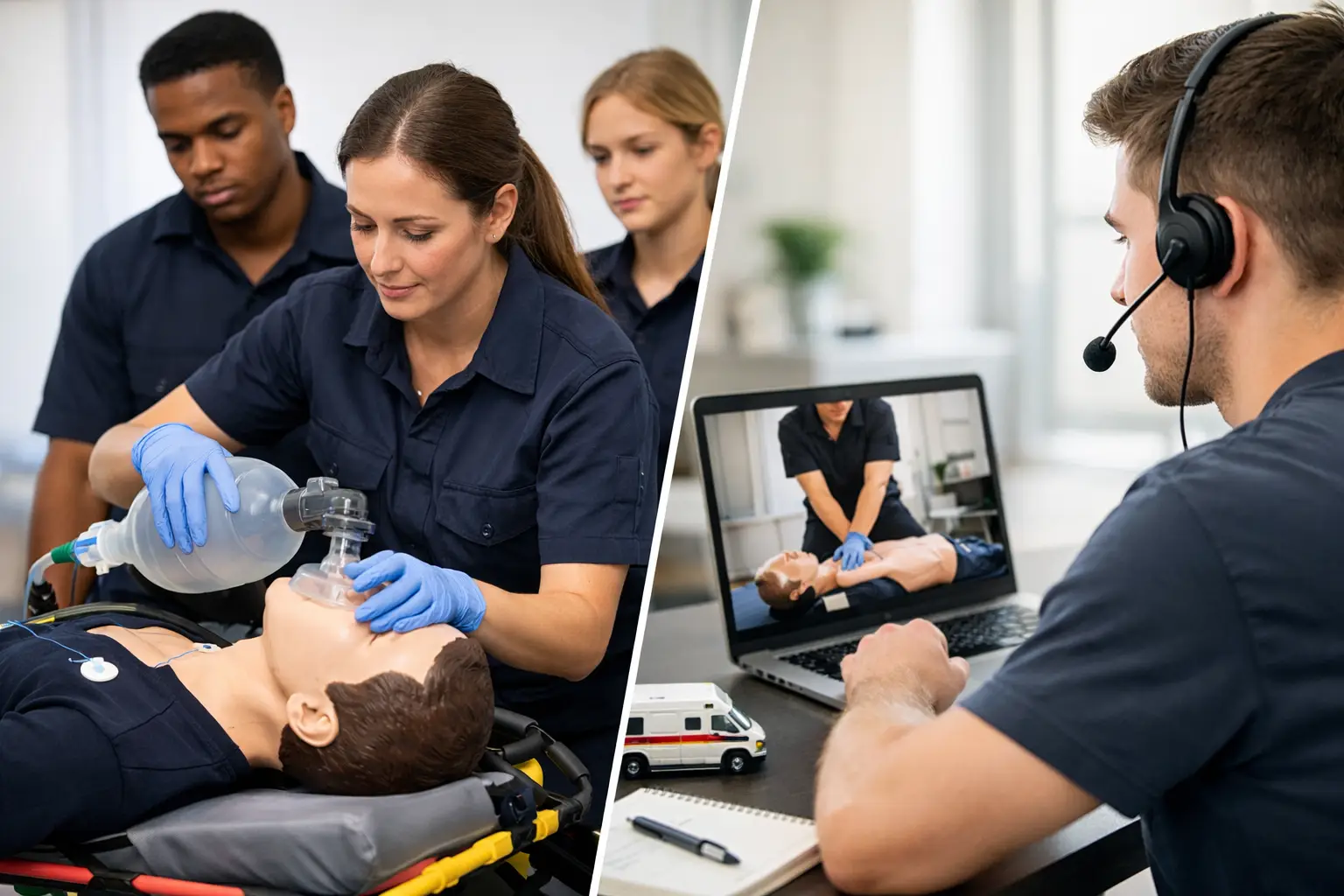
A hybrid EMT course is not an online shortcut, and it is not a reduced version of in-person training. It is a different delivery model. The academic portion is completed online through guided coursework, assignments, lectures, quizzes, and scheduled deadlines. The practical portion happens in person through labs, skills checkoffs, and other required hands-on training.
In EMT education, that balance matters. Students need time to learn anatomy, physiology, airway concepts, trauma assessment, medical emergencies, EMS operations, and patient care principles. They also need live practice with splinting, bleeding control, CPR integration, patient assessments, spinal motion restriction considerations, oxygen delivery, and communication under pressure. A quality hybrid course separates what can be learned independently from what must be practiced face to face.
For working adults, this format can make a major difference. Instead of commuting to class multiple nights each week, students can complete much of the didactic work on their own schedule and then attend required in-person sessions for the parts that should never be left to theory alone.
Why hybrid EMT classes appeal to Texas students
Texas is a large state, and access matters. Many students live far from training centers or work schedules that do not line up with a traditional classroom calendar. Others are changing careers and cannot afford to stop earning an income while they train. Hybrid EMT classes help remove those barriers without lowering the standard.
That flexibility is not just about convenience. It can directly affect whether someone enters the profession at all. A capable future EMT may be balancing 12-hour shifts, childcare, military obligations, or volunteer service. If the only option is sitting in a classroom several evenings every week, that student may never enroll. A hybrid format creates a workable path.
There is also a learning advantage for many adult students. Online coursework allows repetition. If a lesson on respiratory emergencies or patient assessment takes extra time to absorb, students can review it again instead of trying to catch everything in one live lecture. Then, when they arrive for practical training, they can focus on applying knowledge rather than hearing it for the first time.
What to expect from the online portion
The online side of an EMT course should still feel structured and demanding. Students should expect assigned modules, reading, recorded instruction, quizzes, exams, and deadlines that keep progress on track. This is not self-study in the casual sense. It is formal education delivered through a flexible format.
A strong online component also requires accountability. Students need regular pacing so they do not fall behind and try to cram complex material at the last minute. EMT content builds on itself. If a student does not understand airway management, shock, and patient assessment early on, later material becomes harder to manage.
The best hybrid programs make expectations clear from the start. You should know what work is due, when to attend in-person sessions, what equipment or materials are included, and how the course aligns with National Registry and Texas requirements. Transparency matters because most students choosing this format are doing so to simplify an already busy life, not add uncertainty to it.
The in-person training is where confidence takes shape
Hands-on practice cannot be optional
No matter how strong the online platform is, EMT training still has to produce competent entry-level responders. That means in-person labs are not a formality. They are where students learn to move from knowing to doing.
This is where you practice patient assessments until they become organized under pressure. It is where airway skills, trauma care, lifting and moving techniques, and teamwork are observed and corrected in real time. In a hybrid course, these sessions matter even more because they concentrate the practical learning into intentional, focused blocks.
Skills sessions should feel realistic
Good EMT instruction does not stop at checking boxes. Students should expect scenario-based training that reflects the pace and uncertainty of actual emergency response. A textbook can explain altered mental status or chest pain. A live scenario tests whether you can recognize it, communicate clearly, and manage the patient safely.
This is also where instructor quality makes a difference. Supportive, experienced instructors help students build skill and confidence without losing sight of standards. EMS is demanding work. Training should be supportive, but it should also be honest about performance.
Is a hybrid EMT class right for everyone?
Not always. Hybrid learning works best for students who can manage time well, follow a schedule, and stay engaged without sitting in a classroom every week. If you tend to procrastinate or need constant in-person direction, a fully traditional format may feel easier to manage.
That said, many students assume they are not suited for online learning when the real issue is lack of structure. In a well-designed hybrid course, expectations are clear and support is available. The question is less about being a “tech person” and more about whether you can stay organized and show up prepared for skills sessions.
It also depends on your goals and current season of life. A parent with limited evening availability may find hybrid training ideal. Someone who learns best through daily face-to-face interaction may prefer a classroom-heavy model. Neither choice is automatically better. The right choice is the one that helps you complete training successfully and become a safe, effective EMT.
How to evaluate hybrid EMT classes before enrolling
Not all programs use the word hybrid in the same way. Some offer real flexibility with strong hands-on preparation. Others lean heavily on convenience and leave students underprepared for the practical demands of certification and field work.
When comparing options, look closely at compliance, schedule clarity, and how skills training is handled. You should understand whether the course aligns with Texas Department of State Health Services requirements, whether it prepares students for National Registry testing, and how often in-person attendance is required. If those answers are vague, that is a warning sign.
Tuition transparency matters too. Adult learners often choose career training based on whether the full cost is manageable. If a program appears affordable at first but adds fees for materials, testing prep, lab access, or required equipment, the flexibility may come with financial friction. All-inclusive pricing is often a sign that a school understands what working students need.
It also helps to ask how the program supports students who struggle. EMT education should be rigorous, but it should not feel like students are left on their own. Clear communication, responsive instructors, and a practical course structure make a real difference in completion and confidence.
Career preparation matters more than convenience alone
The point of EMT school is not just passing a class. It is becoming ready to care for people on difficult days. That is why the strongest hybrid EMT classes are built around outcomes, not marketing language.
A flexible course should still push students to think critically, perform skills correctly, and communicate like future professionals. It should prepare them for testing, but also for patient contact, team dynamics, and the realities of emergency response. Convenience gets students in the door. Real preparation is what keeps them moving forward.
For many Texans, hybrid training is the most practical route into EMS because it respects both the seriousness of the profession and the reality of adult life. Schools like Texas Rescue Med have leaned into that balance by offering career-focused training that gives students room to manage their schedules while still building the hands-on competence this field demands.
If you are ready to become a lifesaver today, choose a program that treats flexibility as a tool, not a shortcut. The right hybrid path will ask a lot of you, and that is exactly the point.