Choosing a paramedic program is not just about finding the next class start date. Paramedic training in Texas is a serious commitment that asks more of you than memorizing protocols or passing a written exam. You are preparing to make decisions in unstable scenes, support patients in critical moments, and work as part of a system that depends on clinical judgment, skill, and composure.
That is why the right program matters. If you are comparing options, it helps to understand what the process actually looks like, what Texas requires, and where flexibility helps versus where it can fall short.
How paramedic training in Texas is structured
Paramedic education sits above EMT and, in many cases, AEMT training. It is designed for students who want to move into a more advanced role with greater responsibility in patient assessment, airway management, pharmacology, cardiology, trauma care, and medical emergencies. In practical terms, paramedics are expected to do far more than transport. They assess, interpret, intervene, and reassess under pressure.
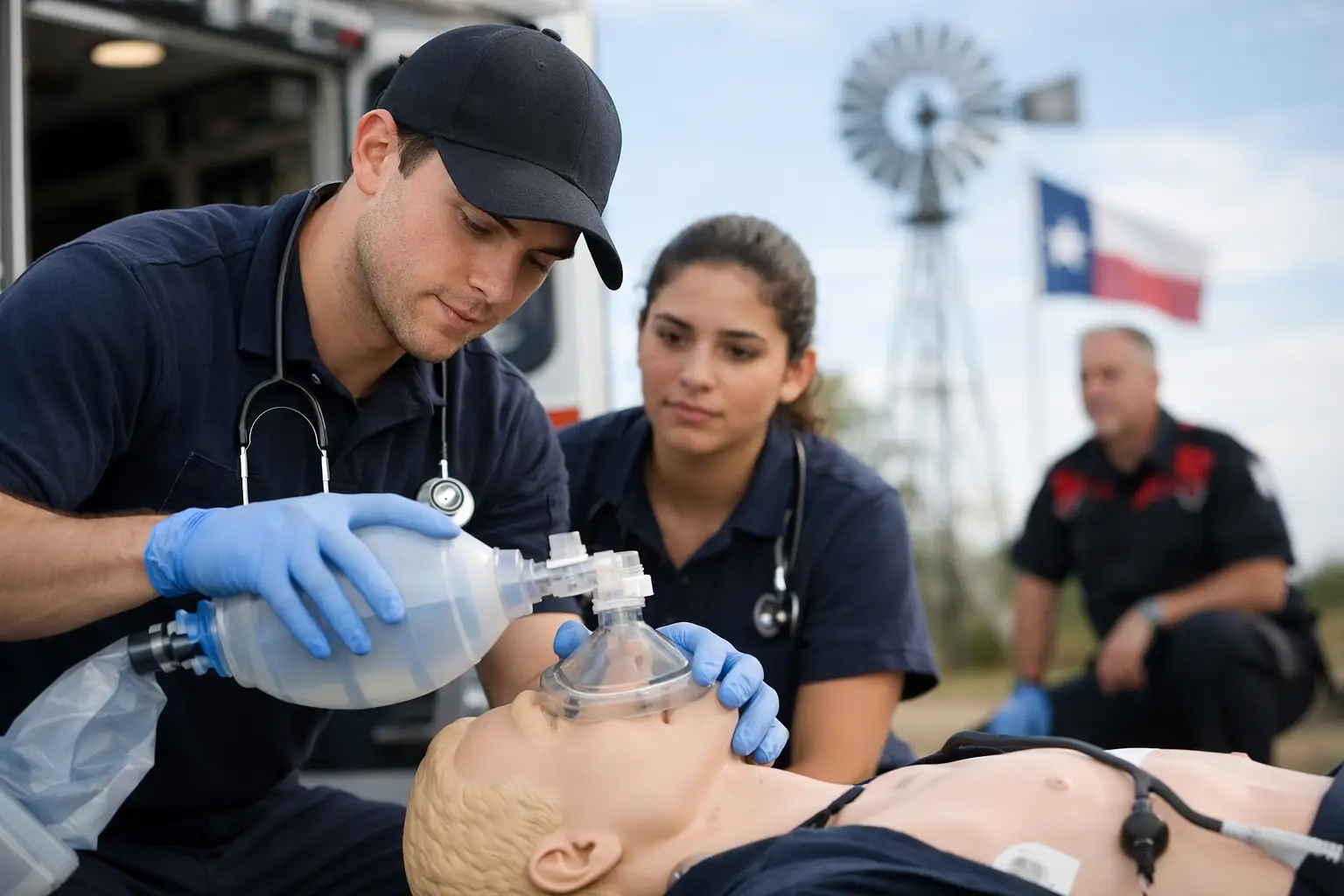
In Texas, programs generally combine didactic instruction, hands-on skills labs, clinical rotations, and field internship time. That mix matters. A student may do well in coursework but still need significant coaching when it comes to patient contact, scene communication, or time-sensitive treatment decisions.
This is where format becomes important. Some students assume fully in-person instruction is the only credible route. Others want a program that is heavily online. The better answer is usually somewhere in the middle. Hybrid training can give working adults the scheduling flexibility they need while still preserving the supervised skills practice and patient-facing experiences required for competent field performance.
Entry requirements can vary
Not every school uses the exact same admissions process, but most paramedic programs in Texas expect students to come in with a current EMT certification and, often, real-world field experience. Some programs strongly prefer or require experience working on an ambulance or in emergency response settings because paramedic-level training builds on fundamentals that should already be solid.
You may also see requirements related to CPR credentials, immunization records, background checks, drug screening, entrance testing, or physical capability standards. These are not there to create friction for its own sake. EMS education has to align with state requirements, clinical site expectations, and patient safety standards.
If you are early in your career and not yet at the EMT level, that does not mean paramedic is out of reach. It means your path is sequential. For many students, the smartest move is to complete EMT first, gain confidence in patient care and operations, and then advance into paramedic training with a much stronger foundation.
What the curriculum actually covers
A strong paramedic curriculum goes well beyond textbook knowledge. You should expect in-depth instruction in anatomy and physiology, pharmacology, cardiology, airway and respiratory management, trauma, medical emergencies, obstetrics, pediatrics, geriatrics, and special populations. You will also spend time on operational topics like incident command, documentation, and communication.
But content alone is not the measure of quality. The real question is whether the program connects knowledge to action. Can you recognize a deteriorating patient? Can you think through treatment priorities when the scene is chaotic? Can you document clearly, communicate with a receiving facility, and work within protocol without losing sight of patient needs?
This is why scenario-based training, skills validation, and supervised clinical exposure matter so much. A program can look comprehensive on paper and still leave students underprepared if practical training is thin.
Clinicals and field internship are where the profession gets real
Classroom instruction teaches the framework. Clinicals and field internship test whether you can apply it.
In most Texas paramedic programs, students rotate through clinical settings such as emergency departments, labor and delivery, intensive care, and other approved patient care environments. They also complete field internship hours with EMS agencies under qualified preceptors. These experiences are essential because they expose students to actual patient presentations, real time pressure, and the less predictable side of emergency care.
This part of training is often where students either gain confidence or realize they need more repetition. That is normal. The jump from theory to patient care is significant.
It is also where scheduling becomes a real-life issue. Adults balancing jobs, family responsibilities, or shift work need a program that understands that flexibility is not a luxury. It is often the difference between starting and never enrolling at all. At the same time, flexibility should never mean watered-down standards. The best programs make room for adult learners without lowering expectations.
Certification and Texas approval are non-negotiable
When evaluating paramedic training in Texas, one of the first things to confirm is whether the program aligns with Texas Department of State Health Services requirements and prepares students for National Registry testing. If a school is vague about compliance, clinical structure, or certification outcomes, that should raise questions.
Students do not need marketing language. They need a clear route from enrollment to eligibility. That means understanding whether the program is approved, how it handles required competencies, what support it provides for exam preparation, and what happens if a student struggles in a skills area or falls behind.
A compliant program does more than help you finish classes. It positions you to pursue certification and enter the workforce with training that employers recognize and trust.
Cost matters, but so does what tuition includes
Paramedic school is an investment, and for many students the financial piece is one of the biggest barriers. Comparing tuition numbers alone can be misleading, though. Some programs advertise a lower base price and then layer on costs for textbooks, testing packages, uniforms, lab fees, insurance, or compliance items.
A transparent program should make it clear what is included and what is not. That matters for budgeting, especially for students changing careers or trying to continue working while in school.
There is also a practical trade-off here. The cheapest option is not always the most affordable if it leads to scheduling problems, weak student support, delayed completion, or poor exam readiness. Career-focused training should be measured by total value, not sticker price alone.
Who succeeds in paramedic school
The strongest paramedic students are not always the ones with the most medical background. More often, they are the ones who show consistency, stay coachable, and treat the training like preparation for a profession rather than just another course.
That means managing time well, asking questions early, practicing skills repeatedly, and taking feedback seriously. It also means being honest about your schedule and support system. Paramedic education is demanding. If you are working full time, have family obligations, or are coming from another field, you need a program structure that is realistic for your life.
This is one reason hybrid models appeal to so many Texas students. When built correctly, they allow substantial coursework to happen on your schedule while preserving the in-person lab, clinical, and field experiences that cannot be replaced. Texas Rescue Med reflects that kind of student-centered approach by focusing on flexible, compliant, real-world EMS education for adults who need a path that fits real life.
Questions to ask before you enroll
Before choosing a program, ask how the course is delivered, what prerequisites are required, how skills labs are scheduled, where clinicals and internships occur, and what exam preparation is included. Ask how tuition works and whether there are extra fees. Ask what kind of support exists if you need help academically or run into scheduling issues.
You should also ask a harder question: does this program appear designed to help students become field-ready, or simply to move them through coursework? Those are not the same thing.
A serious EMS education provider should be able to explain how it develops competence, not just completion. That includes expectations, accountability, practical training, and alignment with the standards that matter in Texas.
The right program is the one that prepares you to serve
Paramedic training is not for people looking for an easy credential. It is for people who want to step into greater responsibility and are willing to earn it through disciplined study, hands-on practice, and professional growth.
If that is the direction you want to take, choose a program that respects both the demands of the profession and the realities of your life. The goal is not simply to get through school. The goal is to become the kind of provider patients, partners, and communities can count on when the call comes in.