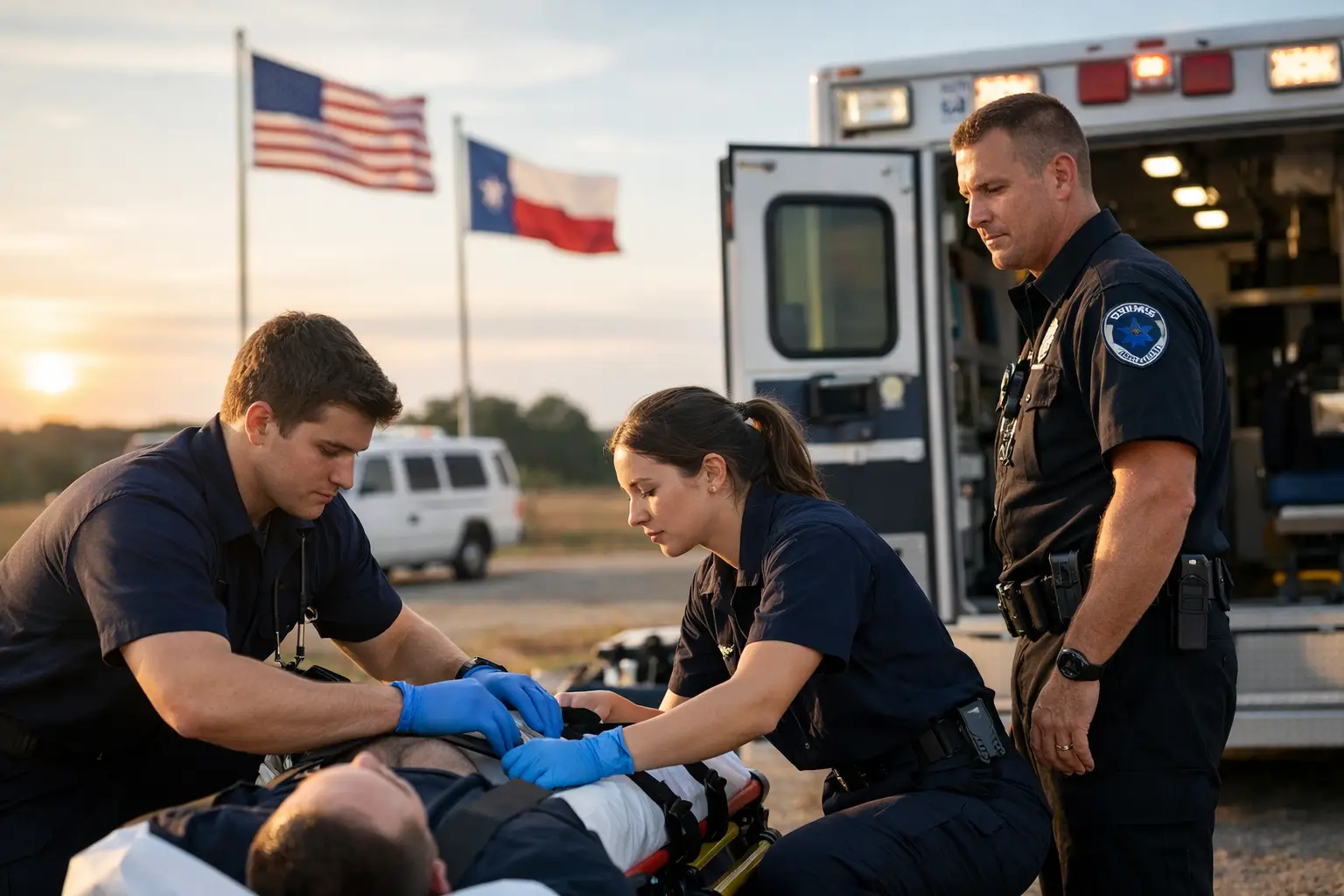
At 2 a.m., nobody cares whether your training was convenient. They care whether you can assess a patient, stay calm, communicate clearly, and do the next right thing. That is why ems training in texas has to do more than check a box. It has to prepare you for certification, for employment, and for the realities of patient care.
For many students, the challenge is not motivation. It is logistics. You may be working full time, raising a family, serving in a fire role, or trying to change careers without putting life on hold. A strong EMS program should respect that reality while still holding the line on standards. Flexibility matters, but not at the expense of competence.
What makes EMS training in Texas different
Texas is a large state with a wide range of service environments. One graduate may work in a dense urban system with high call volume. Another may serve a rural area where transport times are longer and resources are limited. That affects how training should feel. Students need a solid medical foundation, but they also need practical judgment, scene awareness, and confidence under pressure.
There is also a regulatory side that cannot be ignored. Training should align with National Registry expectations and Texas Department of State Health Services requirements. If a course sounds convenient but leaves you unclear on eligibility, psychomotor skills, or exam readiness, that convenience can become expensive later. Good programs make the path clear from day one.
That clarity matters for first-time students especially. EMS has multiple levels, and each one serves a different goal. If you are trying to enter the field quickly, one route may make sense. If you already hold a credential and want more responsibility, another route may be better. The right fit depends on your timeline, your budget, and where you want your career to go.
Understanding the training pathways
The first question many people ask is simple: where do I start?
For some, the starting point is Emergency Medical Responder, or EMR. This can be a practical option for those who need foundational emergency care knowledge, especially in support roles or agencies where a full EMT license is not the immediate goal. It is a shorter entry point, but it is not the same as becoming an EMT.
For most students seeking field employment on an ambulance or a broader entry into EMS, EMT is the more direct route. EMT training covers patient assessment, airway management, trauma care, medical emergencies, and the hands-on skills needed in prehospital settings. It is often the level employers expect when hiring for entry-level patient care roles.
From there, some students move into Advanced EMT, which expands clinical capability and can create more room for advancement. Others continue toward instructor training after gaining field experience, especially if they want to teach, lead agency education, or support workforce development. A future paramedic pathway may also be part of a long-term plan, but that depends on your timeline and readiness for a more demanding clinical load.
The key is not choosing the highest level as fast as possible. The key is choosing the level that fits your current goal and building from a strong base.
What a quality program should include
A quality EMS program should feel structured, not confusing. You should know what is included, what skills you must complete, how the coursework is delivered, and what standards the training is designed to meet.
In practical terms, that means more than recorded lectures and a final exam. EMS education should combine flexible academic work with meaningful hands-on instruction. Online or hybrid delivery can be an excellent fit for adult learners, but only when it is paired with skills practice that prepares you for actual patient contact.
That is where many students need to be careful. Not every flexible program is equally effective. Some offer freedom but not enough guidance. Others overload students with schedule demands that defeat the purpose of hybrid learning. The best balance is a model that lets you complete a significant portion of coursework on your own time while still requiring focused, high-value in-person skills sessions.
All-inclusive tuition is another factor worth paying attention to. When a program looks affordable upfront but adds separate fees for materials, testing support, labs, or required resources, your budget can get stretched fast. Transparent pricing helps students plan and stay committed.
Online and hybrid learning for busy adults
For working adults, flexibility is not a luxury. It is often the deciding factor between enrolling now and waiting another year.
That is one reason hybrid education has become such a strong option for EMS students across the state. It allows learners to manage lectures, reading, assignments, and some assessments around work shifts and family obligations. Then, when it is time for hands-on learning, students can focus on practical application instead of trying to absorb everything at once.
Still, hybrid learning is not easier. It is simply different. You need self-discipline, time management, and the willingness to stay engaged without someone standing over you every day. If you know you learn well with structure but need schedule flexibility, a well-designed hybrid program can be the right answer. If you struggle to stay organized independently, you may need extra support and a program that communicates expectations clearly.
Texas Rescue Med is built around that reality. The goal is not just to make training accessible, but to make it useful for adults who need a clear, compliant path into the profession.
Skills labs, testing, and real-world readiness
No one should finish EMS training feeling untested in the skills that matter. Patient assessment, splinting, airway support, bleeding control, lifting and moving, and communication under stress are not theoretical subjects. They are performance expectations.
That is why skills labs matter so much. A good lab is not just about checking off stations. It is about repetition, correction, and decision-making. You should leave knowing where you are strong and where you still need work. Honest feedback is part of quality training.
The same goes for exam preparation. Passing the NREMT is a major milestone, but exam success and field readiness are not always identical. Some students are excellent test takers and still feel shaky in scenario-based care. Others perform well in practical settings but need help with test strategy and content review. Strong programs recognize both sides of the equation.
This is where instructor support becomes critical. Students need access to experienced educators who can explain the why behind protocols, not just the right answer on a quiz. That kind of teaching builds confidence that lasts beyond graduation.
Cost, time, and the trade-offs to consider
Every student wants a program that is fast, affordable, and high quality. In reality, there is usually some trade-off.
A very short program may help you move quickly, but you need to make sure it still gives you enough time to absorb material and master skills. A very low-cost option may look attractive, but if it cuts corners on support, lab quality, or exam preparation, the savings may not hold up. On the other hand, the most expensive option is not automatically the best.
What matters is value. Are you getting a training experience that supports certification, prepares you for hiring, and respects your real-life schedule? If the answer is yes, that is worth serious consideration.
Time commitment matters too. Even flexible programs require consistent effort. Students sometimes underestimate how much weekly focus EMS coursework demands, especially when balancing work and family. It is better to enter training with a realistic plan than to assume you will somehow fit it in later.
How to choose the right EMS program in Texas
If you are comparing options, ask practical questions. Does the program align with Texas requirements? Does it prepare students for National Registry testing? How are skills handled? What is included in tuition? What kind of instructor support is available? What does the course schedule actually look like for a working adult?
Also ask yourself a more personal question: what kind of learner are you? Some students need maximum flexibility. Others need more external structure. Some want the fastest route into the workforce. Others are thinking two or three credentials ahead. The right program is the one that fits both the profession’s standards and your life as it exists today.
EMS is not casual work. It asks for clinical skill, emotional control, and a willingness to keep learning. Your training should reflect that seriousness while still making the path possible. When a program combines flexibility, compliance, and real-world preparation, it does more than help you earn a credential. It helps you step into the field with purpose.
If you are ready to begin or advance, choose training that treats your goals with urgency and your future patients with respect. Become a lifesaver today by starting with a program built to prepare you for the work that waits on the other side.
EMT or Emr
It depends on your goals! EMT is generally the entry level for positions that pay.