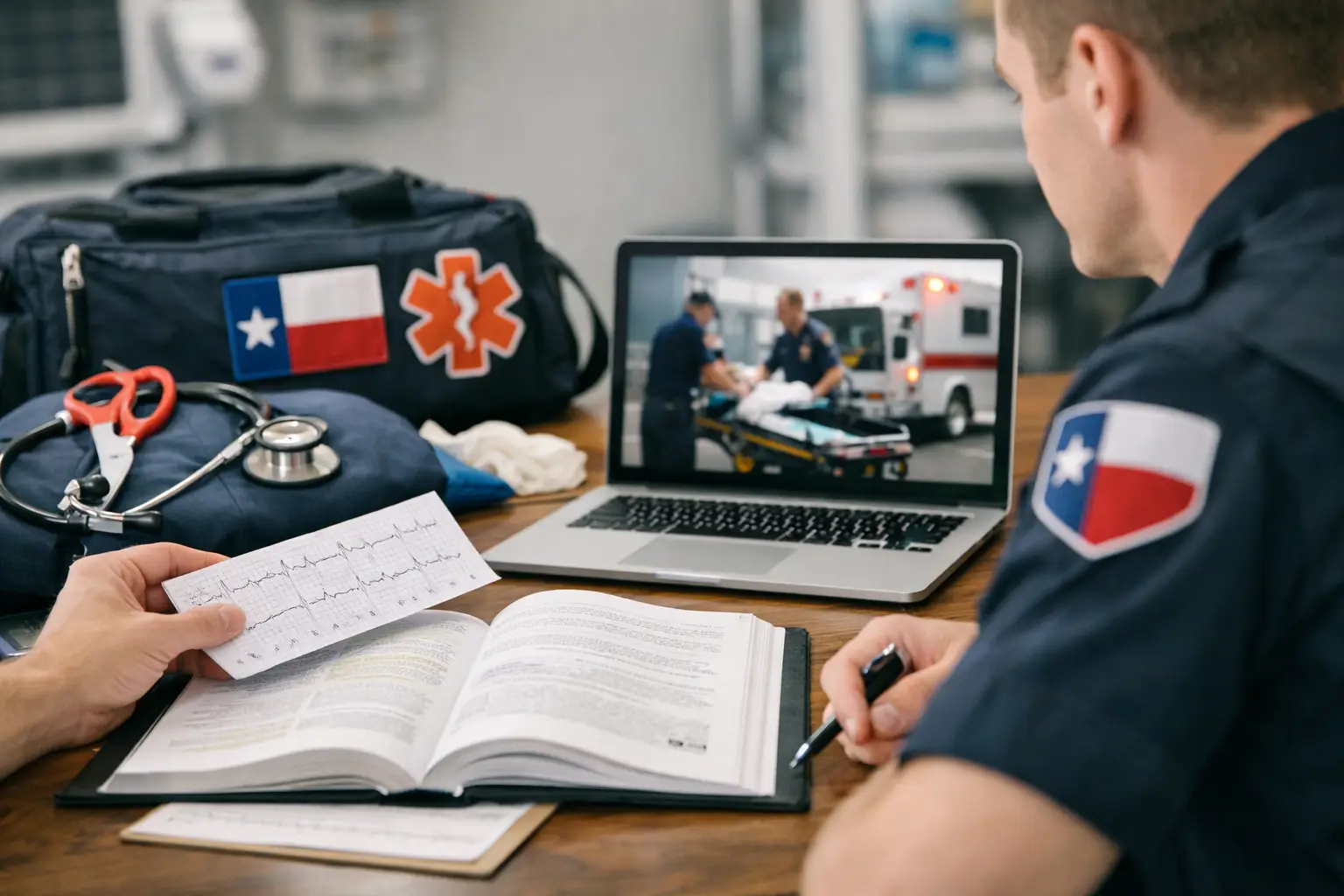
Most students do not fail the Registry because they are incapable. They struggle because their nremt exam preparation is too scattered, too passive, or too focused on memorizing facts without understanding how EMS decisions work under pressure.
That matters because the NREMT is not just checking whether you read the chapter. It is evaluating whether you can think like an entry-level provider. If you are preparing for EMT or AEMT testing, your study plan needs to reflect the real demands of patient care – scene awareness, prioritization, safety, and sound clinical judgment.
What good NREMT exam preparation really looks like
Strong nremt exam preparation is built on three things: content mastery, test-taking discipline, and practical reasoning. If one of those is missing, your score can suffer even if you feel like you studied hard.
Content mastery means you know the material well enough to apply it, not just recognize a term on a flash card. Test-taking discipline means you can slow down, read carefully, and avoid changing good answers for the wrong reasons. Practical reasoning means you can identify what matters most in a patient scenario and choose the next best action.
This is why students who only reread notes often hit a wall. Passive review feels productive, but it rarely prepares you for a computer adaptive exam that expects judgment, not just recall.
Start with the NREMT exam blueprint
Before you build a study schedule, know what the exam is asking from you. The NREMT tests broad areas such as airway, respiration, circulation, trauma, medical and obstetric emergencies, and EMS operations. Those categories are familiar, but the exam often combines them in ways that force you to prioritize.
A trauma question may really be an airway question. A medical question may actually be testing scene safety or transport decision-making. That is one reason students sometimes feel blindsided. The content is not always harder than class content, but the thinking required is more precise.
Start by identifying your weakest domains. If airway is weak, say so clearly. If operations questions consistently trip you up, do not ignore that because it feels less clinical. Your study time should match your performance gaps, not your preferences.
Build an NREMT exam preparation schedule you can keep
A perfect plan that lasts three days is not better than a simple plan you can follow for four weeks. Adult learners often juggle work, family, and shift schedules, so consistency matters more than intensity.
Set a realistic weekly structure. Many students do better with shorter daily sessions than with one long weekend cram session. An hour of focused review five days a week usually beats five distracted hours all at once. If your schedule is unpredictable, set a minimum standard. Even 30 minutes of high-value review is enough to maintain momentum.
Break your week into focused blocks. Spend one session on airway and ventilation, another on trauma, another on cardiology and medical emergencies, and another on operations. Use your final weekly session for mixed practice questions. That mixed review matters because the actual exam does not separate topics neatly.
Keep your resources limited. One solid textbook, your class notes, and a credible question bank are usually enough. Too many study tools create noise. If you are constantly switching apps, videos, and guides, you may feel busy without actually improving.
Practice questions are essential, but only if you review them correctly
Doing hundreds of questions is not the goal. Learning from them is.
When you miss a question, do not just note the correct answer and move on. Ask why your choice was wrong, why the correct answer was better, and what clue in the scenario should have changed your thinking. That is where real growth happens.
Pay close attention to patterns in your errors. Some students miss questions because their content knowledge is weak. Others know the material but rush past key words such as first, best, initial, or most appropriate. Some overthink and talk themselves out of a simple answer. Those are different problems, and they need different fixes.
A useful rule is this: if you cannot explain your answer out loud, you probably do not understand it deeply enough yet. The Registry rewards reasoning, not lucky guessing.
Focus on patient priority, not trivia
One of the biggest mistakes in nremt exam preparation is spending too much time on low-value details while neglecting core patient care priorities. The exam is much more interested in whether you can identify a life threat than whether you remember an isolated fact with no context.
That means your review should center on questions like these: What will kill this patient first? What should I recognize immediately? What intervention is appropriate for my certification level? What needs to happen before transport, and what can wait?
If you train yourself to think in that order, many questions become more manageable. You may still face two plausible answers, but one will usually fit EMS priorities more clearly.
This is also where airway, breathing, and circulation continue to matter. Students sometimes assume the exam is trying to trick them into picking a complex answer. Often it is checking whether they will handle the basics before chasing something advanced.
Strengthen the areas that students commonly underestimate
Airway and ventilation deserve more attention than most students give them. It is easy to feel comfortable with these topics until a question adds altered mental status, poor chest rise, noisy breathing, or an ineffective respiratory rate. At that point, memorized definitions are not enough.
EMS operations is another area students often underprepare for. Yet questions on safety, triage, incident command, hazardous scenes, consent, refusal, and communication are central to competent field practice. These are not filler topics. They are part of being a safe provider.
Medical scenarios also deserve careful review because they can feel less predictable than trauma. Trauma often gives you visual clues and a clear mechanism. Medical calls require broader pattern recognition. You need to distinguish respiratory distress from shock, diabetic emergencies from stroke, and cardiac complaints from anxiety without getting careless.
Study the way you will have to think on test day
The NREMT is not a memory contest. It is a decision-making exam. Your preparation should reflect that.
Instead of only asking, What is the definition? ask, What would I do next? Instead of only reviewing isolated signs and symptoms, compare similar conditions and identify what separates them. Instead of memorizing skill steps without context, connect each step to why it matters for patient outcome and safety.
This is especially important for students coming from flexible online or hybrid coursework. That format can be a major advantage when it is structured well because it allows repetition on your schedule. But it also requires self-direction. If you wait until the last week to get serious, flexibility turns into stress very quickly.
At Texas Rescue Med, that connection between flexible training and real-world readiness is central. The goal is not just course completion. The goal is producing providers who can meet certification standards and perform with confidence when the call comes in.
How to handle test anxiety without losing performance
Some anxiety is normal. In fact, a moderate level of pressure can improve focus. The problem starts when anxiety speeds you up, clouds your reading, or makes you second-guess every answer.
The fix is not to pretend nerves do not exist. The fix is preparation that creates familiarity. Take timed practice sessions. Sit at a desk. Work in silence. Get used to committing to an answer and moving on. That reduces the shock of the real testing environment.
The night before the exam, avoid trying to relearn everything. Review a few high-yield concepts, then stop. Fatigue and panic are worse for performance than leaving one topic imperfectly reviewed.
On test day, read every question carefully and anchor yourself in provider priorities. Ask what is happening, what is dangerous right now, and what an entry-level EMS professional should do first. If two answers seem possible, choose the one that best protects the patient with the information given.
When your score is not where you want it
If practice scores stay low, do not label yourself as bad at testing. Get specific. Are you missing airway questions because you do not understand ventilation, or because you misread scenarios? Are trauma questions weak because you forget assessment order, or because you struggle to identify life threats?
Once you know the issue, your preparation becomes much more effective. Sometimes the best move is not more study time, but better study quality. Slower review, targeted remediation, and better question analysis often outperform another round of cramming.
Progress in EMS education is rarely about perfection. It is about building dependable judgment one decision at a time. If you stay consistent, study actively, and keep your focus on patient-centered priorities, your exam readiness will improve.
Become a lifesaver today by treating your preparation with the same seriousness the field demands. The Registry is one step in the process, but the habits you build now will stay with you far beyond test day.