If you are asking, are there online EMT programs, the short answer is yes – but not in the way many people first imagine. EMT training can include a significant online academic component, yet no legitimate program can move the entire process to a screen. At some point, you must practice hands-on skills, complete required assessments, and meet state and national standards for patient care readiness.
That distinction matters, especially if you are trying to balance school with work, family, or a rotating shift schedule. Many students are not looking for an easier path. They are looking for a realistic one. A strong online or hybrid EMT program gives you flexibility where flexibility makes sense, while still preparing you for the practical demands of emergency medical services.
Are There Online EMT Programs, or Only Hybrid Options?
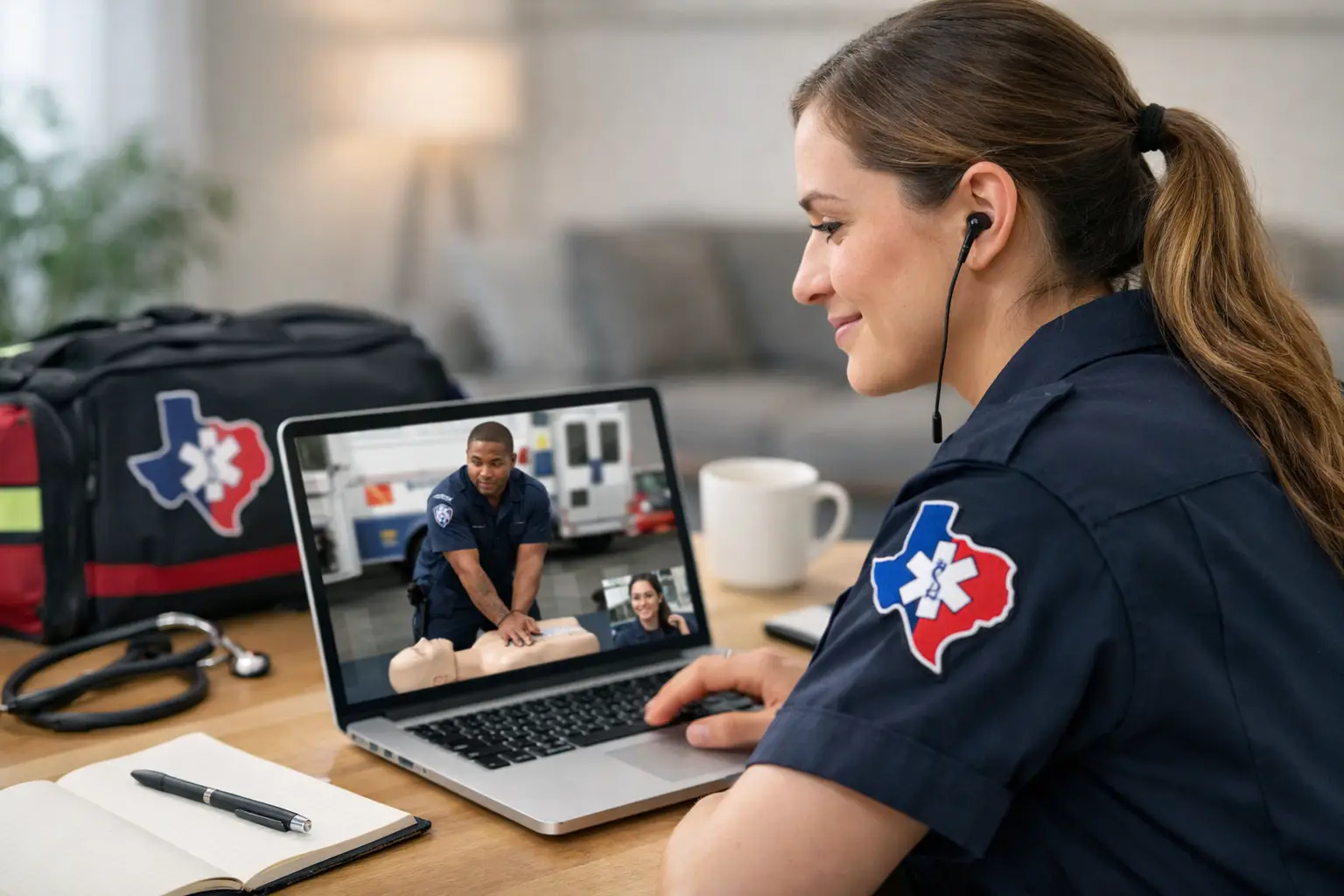
There are online EMT programs in the sense that many schools deliver lectures, reading assignments, quizzes, discussion work, and exam prep through an online learning platform. What usually does not happen online are the hands-on portions of your education. Skills such as airway management, patient assessment, CPR integration, splinting, bleeding control, lifting and moving patients, and scenario-based care require in-person instruction and evaluation.
That is why most credible EMT programs are better described as hybrid. The academic content may be completed online on your own schedule or in weekly modules, while labs, skills checkoffs, and clinical or field requirements happen in person.
For adult learners, that setup often makes the difference between enrolling and putting the goal off for another year. You can complete a large share of the coursework from home, but you still get the practical training needed to become a competent entry-level EMT.
What Parts of EMT School Can Be Done Online?
A lot of foundational EMS education works well online when the course is built correctly. Anatomy and physiology basics, medical terminology, EMS systems, trauma concepts, medical emergencies, patient assessment principles, and test preparation are all commonly taught through online modules.
The benefit is not just convenience. Online delivery can give students more control over pacing. If a respiratory chapter takes extra review, you can spend more time there. If you already have healthcare exposure, you may move faster through familiar material. For working adults, that kind of flexibility is often the only practical way to train for a new career.
Still, flexibility should not be confused with low accountability. A quality online EMT program should have a clear schedule, instructor support, measurable progress, and defined skill requirements. If a program sounds vague about standards, that is a warning sign.
What Cannot Be Done Fully Online?
This is where students need clear expectations. You cannot become job-ready as an EMT through video lessons alone. EMS is a hands-on profession. You need to demonstrate that you can think clearly, communicate well, and perform basic life-saving interventions with real equipment and under observation.
In most programs, in-person requirements include psychomotor skills practice, scenario testing, and often clinical or field experience depending on the program structure and state expectations. Even if a course markets itself as online, you should assume there will be mandatory in-person components.
That is not a drawback. It is part of what protects patients and prepares students. The goal is not just passing a course. The goal is being able to respond when someone cannot breathe, is bleeding heavily, or is having the worst day of their life.
How Online EMT Programs Work in Texas
If you plan to train in Texas, you need to think beyond convenience and focus on compliance. EMT education must align with Texas Department of State Health Services requirements and the standards tied to National Registry preparation. That means the structure of the program matters just as much as the format.
A Texas student should look for a program that clearly explains how online coursework, in-person skills training, and exam preparation fit together. You should also be able to understand what is included in tuition, what equipment or fees may be separate, how skills are scheduled, and what support is available if you need help staying on track.
This is especially important for career changers. If you are leaving another field to enter EMS, you do not need a confusing process. You need a direct path from enrollment to training to certification readiness.
How to Tell if an Online EMT Program Is Legitimate
Not every online option is built the same. Some are designed for real workforce preparation. Others lean too heavily on marketing language and not enough on how students actually become competent providers.
Start by asking whether the program meets state requirements and prepares students for the National Registry process. Then ask how hands-on skills are taught and evaluated. If the answer is unclear, that is a problem.
You should also look at instructor accessibility. EMT students benefit from being able to ask questions, review weak areas, and get practical coaching. A flexible course should still feel structured and supported.
Another factor is transparency. Legitimate programs are usually very clear about attendance expectations, lab requirements, timelines, and total costs. If a school avoids specifics, students often end up discovering extra hurdles later.
Who Benefits Most From Hybrid EMT Training?
Hybrid EMT training is often the best fit for adults who need career-focused education without sitting in a classroom several nights a week. That includes parents, full-time workers, volunteer firefighters, law enforcement applicants, and people already working in healthcare support roles.
It is also a strong option for self-motivated learners. If you can manage deadlines, study independently, and show up prepared for hands-on sessions, the online portion can work in your favor. You spend less time commuting and more time focusing on the material.
At the same time, it is not ideal for everyone. Some students learn best through live, constant face-to-face instruction. Others struggle when they have too much control over their own study schedule. The right format depends partly on your learning style, discipline, and daily responsibilities.
What to Expect From a Strong Online EMT Program
A good program should do more than help you check a box. It should build confidence before you ever step into the field. That means the course should connect textbook knowledge to real patient care situations, not just feed you information for a test.
You should expect organized online coursework, practical skills sessions, responsive instructors, and preparation that reflects actual EMS work. You should also expect honest standards. EMT school should be accessible, but it should also be serious. Patients, partners, and employers are counting on your training to mean something.
This is where a mission-led training provider stands out. Texas Rescue Med is built around flexible, compliant EMS education for students who need a path that fits real life without lowering the bar. That matters because good EMT training should respect your schedule and your future profession at the same time.
Are Online EMT Programs Worth It?
For many students, yes. A well-designed hybrid program can remove common barriers like long commutes, rigid class times, and unnecessary scheduling conflicts. It can make EMT education more accessible without sacrificing the hands-on preparation that emergency care demands.
But the value depends on the program. If the online portion is organized, the in-person skills training is meaningful, and the course aligns with certification requirements, hybrid EMT education can be an excellent route into the field. If those pieces are missing, convenience alone will not carry you very far.
The better question is not just whether online EMT programs exist. It is whether the program you choose will prepare you to perform under pressure, care for people with confidence, and take the next step toward certification.
If you are ready to become a lifesaver, look for training that gives you both flexibility and accountability. The best EMT programs do not ask you to choose between convenience and credibility. They help you build both, one skill at a time.