If your work schedule changes every week, your family depends on you, or the nearest traditional EMT class feels impossible to attend, an online hybrid EMT program can be the difference between putting your plans on hold and actually starting. For many future EMTs in Texas, flexibility is not a bonus. It is what makes training possible.
That said, flexibility should never come at the cost of competence. EMT training is not a field where shortcuts serve students, patients, or employers. The right program gives you room to complete academic coursework on your schedule while still holding a clear line on skills, clinical readiness, and certification standards.
What an online hybrid EMT program actually means
A lot of prospective students hear the phrase and assume it means fully online. That is usually not the case, and it should not be. EMT education includes material that can be taught effectively online, such as anatomy, patient assessment concepts, airway principles, medical terminology, trauma care foundations, and preparation for written testing. It also includes practical skills that must be demonstrated in person.
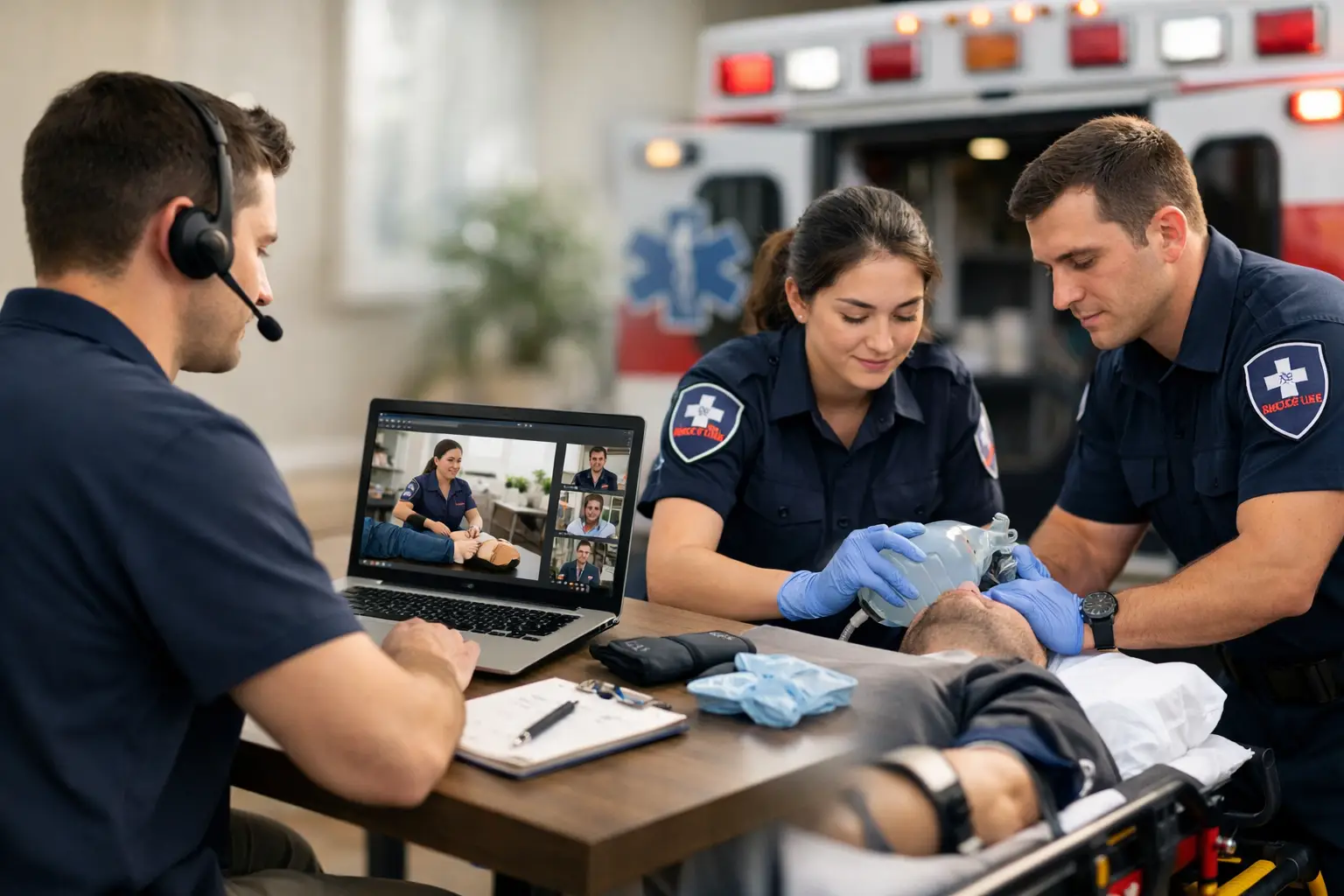
In a true hybrid format, the online portion handles a significant share of the didactic coursework. You move through lectures, assignments, readings, quizzes, and exam prep with more control over your weekly schedule. Then you attend required in-person sessions for hands-on skills, psychomotor training, scenario work, and any clinical or field-related requirements tied to your state and program standards.
That balance matters. EMTs do not just need to know the material. They need to perform under pressure, communicate clearly, and make sound decisions in real time. A credible hybrid model respects both sides of that equation.
Why an online hybrid EMT program appeals to adult learners
Most EMT students are not choosing between a traditional college schedule and a hybrid one in a vacuum. They are balancing work, childcare, shift rotations, military service, second careers, or financial pressure. In that context, the appeal is straightforward.
A hybrid path can reduce commuting time, make studying more realistic during off-hours, and let students pace some academic work around the rest of life. For a motivated adult learner, that can create a much more sustainable route into EMS.
It also tends to support students who learn best by reviewing material more than once. When lectures or course modules are available online, students can revisit key topics before practical sessions or written exams. That can build confidence, especially for first-time EMS students who are stepping into a medical environment for the first time.
Still, flexibility cuts both ways. If you struggle with time management, procrastinate easily, or need frequent face-to-face structure to stay on track, hybrid learning may feel harder than expected. It is a strong fit for many people, but not every person.
The non-negotiable part – hands-on training
No quality EMT program should treat skills lab as an afterthought. In-person training is where students turn theory into action. It is where you practice airway management, bleeding control, splinting, lifting and moving patients, vital signs, patient assessment, and communication in realistic scenarios.
This is also where instructors can correct habits before they become problems. Reading about a trauma assessment is not the same as performing one efficiently while someone watches your sequence, timing, communication, and decision-making. In EMS, details matter.
That is why the best hybrid programs are not simply convenient. They are structured. They set clear expectations for attendance, performance, skills checkoffs, and readiness for the next stage of training.
What to look for in an online hybrid EMT program
Not all programs are built with the same level of quality or compliance. If you are comparing options, look beyond the marketing language.
First, make sure the program aligns with National Registry expectations and Texas requirements. Students need a course that is designed to support certification, not just course completion. If the program cannot clearly explain how it prepares students for the NREMT cognitive exam and state-level eligibility, that is a problem.
Second, examine how the hands-on portion is delivered. Ask how often students meet in person, how skills are evaluated, who teaches the labs, and how much scenario-based practice is included. A program can have strong online content and still fall short if the practical side is weak.
Third, pay attention to tuition transparency. Many students underestimate the total cost of EMS training because some providers advertise a base rate and then add fees for books, materials, testing prep, uniforms, labs, or other required components. All-inclusive pricing is not just convenient. It helps students plan realistically.
Fourth, consider whether the school understands the realities of employability. Good EMT training should prepare you for exams, but that is only part of the outcome. Employers want graduates who can function on a team, communicate professionally, and step into patient care with a serious foundation.
Online hybrid EMT program options in Texas
Texas students face a specific set of questions because training is not just about learning EMT content. It is about meeting the requirements tied to Texas approval and building toward National Registry certification where applicable.
That means a Texas-based student should look for a program that understands both regulatory compliance and local workforce expectations. The goal is not merely to pass a class. The goal is to become eligible, prepared, and employable.
This is where provider credibility matters. A serious EMS training institution should be able to explain how coursework, skills instruction, and exam preparation fit together. It should also be honest about the effort required. Hybrid does not mean easy. It means accessible, if the student is willing to do the work.
For students across Texas, that accessibility can be significant. Instead of needing to sit in a classroom several nights a week, they can complete much of the academic training remotely and report for scheduled in-person requirements that focus on what must be practiced live. That model opens doors for rural students, working adults, and career changers who may otherwise never start.
Who should choose this format
An online hybrid EMT program is often a strong fit for self-directed students who need flexibility but still want a structured path to certification. It works well for adults with demanding calendars, current responders adding credentials, and students who want to enter the workforce without stepping away from their current responsibilities entirely.
It can also be a good option for students who prefer to absorb lecture content independently and then use in-person time for application and coaching. In a strong hybrid model, that is exactly how the training should work.
But if you know you need daily classroom accountability or you are not comfortable managing deadlines without constant reminders, you should be honest with yourself before enrolling. The best program in the world cannot replace personal discipline.
Common concerns students have
One of the biggest concerns is whether employers take hybrid training seriously. The answer depends on the quality of the program, not the format alone. Employers care about whether graduates are competent, certified, and ready to work. If your training is compliant, skills-based, and aligned with real EMS expectations, hybrid delivery is not automatically a disadvantage.
Another concern is whether students feel prepared for patient care after doing part of the course online. That depends on how well the program integrates the two sides of training. When online instruction is clear and the in-person sessions are rigorous, students can build both knowledge and practical readiness effectively.
Students also worry about the NREMT exam. That concern is justified. Passing the cognitive exam takes preparation, not guesswork. A quality program should build exam readiness into the course instead of leaving students to figure it out at the end.
The standard you should expect
If you are investing your time, money, and future in EMT training, you should expect more than convenience. You should expect instruction that respects the responsibility of the role. EMTs enter unpredictable environments, make time-sensitive decisions, and care for people on some of the hardest days of their lives.
That means your education should be flexible enough to help you start, but rigorous enough to help you succeed. A program like Texas Rescue Med reflects that standard when it pairs accessible online learning with practical, compliant, career-focused training designed for real field performance.
Choosing the right path into EMS is not about finding the easiest route. It is about finding a route you can actually complete – one that prepares you to earn certification, serve with confidence, and grow into the kind of provider your community can trust. Become a lifesaver today by choosing training that fits your life without lowering the bar.