If you are searching for ems certification texas online, you are probably trying to answer a practical question fast: can you actually train for EMS in Texas without putting your life on hold? The short answer is yes, but not in a way that skips the work. In Texas, quality EMS education can move a large share of the academic coursework online, while still requiring hands-on skills, clinical readiness, and state-aligned training that prepares you for real patient care.
That distinction matters. A serious EMS program is not just about convenience. It is about building the knowledge, judgment, and confidence needed to step into uncontrolled scenes, make sound decisions, and care for people on their worst day. If an online format helps you get there without sacrificing standards, it can be a strong path forward.
How EMS certification Texas online really works
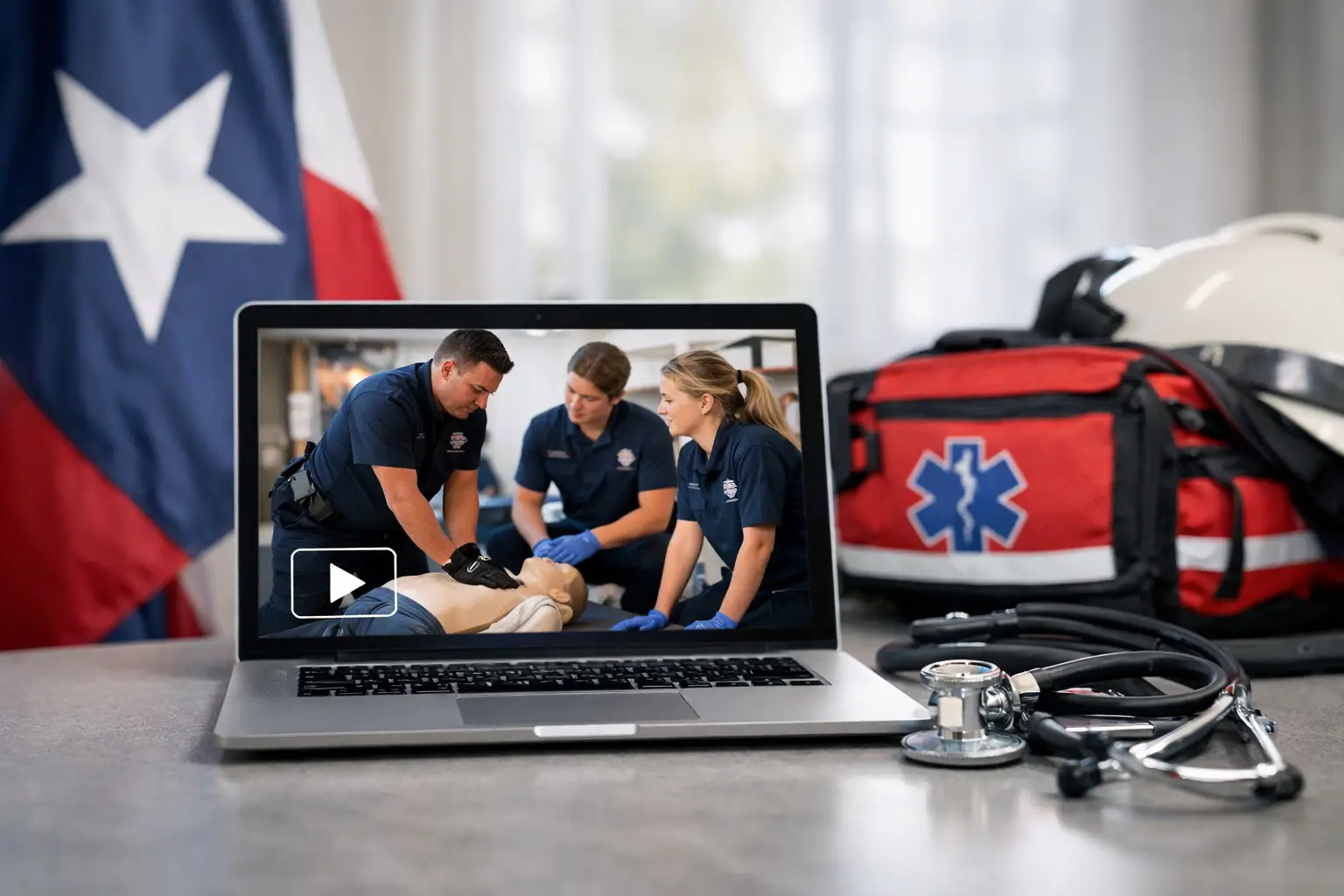
The phrase “online EMS certification” can be misleading if you are new to the field. In Texas, most entry-level and advanced EMS pathways are not fully online from start to finish. The lecture-heavy portions may be delivered online or in a hybrid format, but skill labs, psychomotor training, and depending on the level, clinical or field requirements still need in-person completion.
That is not a drawback. It is part of what makes the training credible. EMS is hands-on work. You can learn anatomy, patient assessment frameworks, trauma principles, and medical terminology online. You cannot build airway skills, patient movement technique, or scene-based confidence through a screen alone.
For many adult learners, this hybrid structure is the best middle ground. You get schedule flexibility for coursework, while still receiving direct evaluation where it counts most. That can make a major difference if you are balancing shift work, family responsibilities, or a career transition.
Which certifications can be started online in Texas?
The right answer depends on your career stage. Some students are entering EMS for the first time. Others are moving from EMR to EMT, EMT to AEMT, or preparing for instructor roles. In each case, online delivery can support the didactic portion, but your end goal should always be a program that aligns with Texas Department of State Health Services requirements and National Registry expectations where applicable.
EMR and EMT pathways
For new students, Emergency Medical Responder and Emergency Medical Technician programs are often the first stop. These levels can often include substantial online coursework, especially in programs designed for working adults. You complete reading, lectures, quizzes, and exam prep on your own schedule, then attend required in-person sessions for practical skills and competency checks.
EMT is where many students begin if they want a direct route into ambulance services, emergency response, or a broader healthcare career track. It is also the point where program quality matters a lot. A flexible course is useful. A flexible course that also prepares you for the NREMT and for actual field performance is what you should be looking for.
AEMT and advanced training
If you are already credentialed and advancing your scope, hybrid delivery can make progression more manageable. Advanced coursework often benefits from online structure because it lets experienced responders study around unpredictable schedules. Still, as the clinical demands increase, so does the need for strong in-person instruction and supervised skill development.
That is where trade-offs show up. A program that promises maximum convenience but offers minimal live support may not serve an advancing provider well. At higher levels, students usually need clear instructor access, structured skill validation, and direct feedback on decision-making.
Instructor-track education
For experienced EMS professionals who want to teach, online learning can also be a practical option. Instructor preparation often includes educational theory, documentation standards, lesson planning, and regulatory content that works well in an online environment. But even here, the strongest programs connect instruction to real classroom performance, not just course completion.
What a compliant Texas program should include
If you are comparing options for ems certification texas online, the most important question is not whether a program is convenient. It is whether the program is legitimate, approved, and designed to help you meet certification requirements without confusion later.
A strong Texas-focused EMS program should clearly explain the credential level, required in-person components, exam preparation process, and any state or National Registry alignment. It should also be direct about schedule expectations. Flexibility is valuable, but students should still know when labs, skills checkoffs, and other mandatory sessions happen.
Transparency matters here. So does tuition structure. Many students entering EMS are cost-conscious and trying to avoid hidden fees. Programs with all-inclusive pricing can reduce friction and help you plan better from day one.
How to tell if an online EMS program fits your life
Not every student needs the same format. If you work rotating shifts, asynchronous coursework may be the deciding factor. If you have been out of school for years, you may need a program with more instructor guidance and a clearer weekly rhythm. If you are highly self-directed, you may prefer a course that gives you room to move quickly through the academic material.
The key is being honest about how you learn. Online coursework rewards consistency. If you need frequent reminders, face-to-face accountability, or real-time discussion to stay engaged, a heavily self-paced format may feel harder than it looks. On the other hand, if commuting to class several nights a week would keep you from enrolling at all, hybrid training may be what finally makes this career move possible.
That is why the best programs are not just “online.” They are structured for completion. They help students keep moving, understand the certification path, and show up ready for the in-person portions.
Why hands-on training still matters in EMS certification Texas online
There is no substitute for practicing patient assessment with an instructor watching, correcting, and pushing you to improve. In EMS, small mistakes can become big problems under pressure. A good training environment lets you make those mistakes before they happen in the field.
Hands-on sessions also help students connect theory to action. It is one thing to read about airway management or trauma care. It is another to perform under a time limit, communicate with a team, and think clearly while being evaluated.
This is one reason serious students should be careful with programs that market convenience without describing practical training in detail. If the in-person component feels vague, that is worth questioning. Quality EMS education should be clear about how you develop competence, not just how you complete modules.
What employers tend to care about
Most employers are not impressed by the word “online” by itself. They care whether you are certified, prepared, and ready to function in the role. They want to know that your training covered the required standards, that you can perform core skills safely, and that you understand the pace and responsibility of EMS work.
That is good news for students. It means the better question is not whether online learning is respected. It is whether your program produces capable entry-level or advancing providers. If it does, the delivery format becomes part of the story, not the whole story.
For many students across Texas, that flexibility is exactly what opens the door. A hybrid model can make EMS training accessible without lowering expectations. That is a meaningful difference, especially in a profession built on readiness.
Choosing the right path forward
When evaluating ems certification texas online, look past marketing phrases and focus on outcomes. Can the program fit your schedule without leaving you unsupported? Does it prepare you for certification exams and for real patient care? Are the in-person requirements clearly defined? Is the training built around Texas compliance rather than generic national messaging?
Those questions usually lead you to the right choice faster than price alone. A lower upfront cost can become expensive if a program lacks structure, adds surprise fees, or leaves you underprepared for testing and field work.
Texas Rescue Med serves students who need that balance – flexible coursework, compliant training, and practical preparation for the realities of emergency response. That approach matters because EMS is not a casual career move. It is a commitment to competence, service, and calm under pressure.
If you are ready to take the next step, choose a program that respects both your schedule and the seriousness of the profession. The right training should do more than help you earn a credential. It should help you become someone others can count on when every second matters.