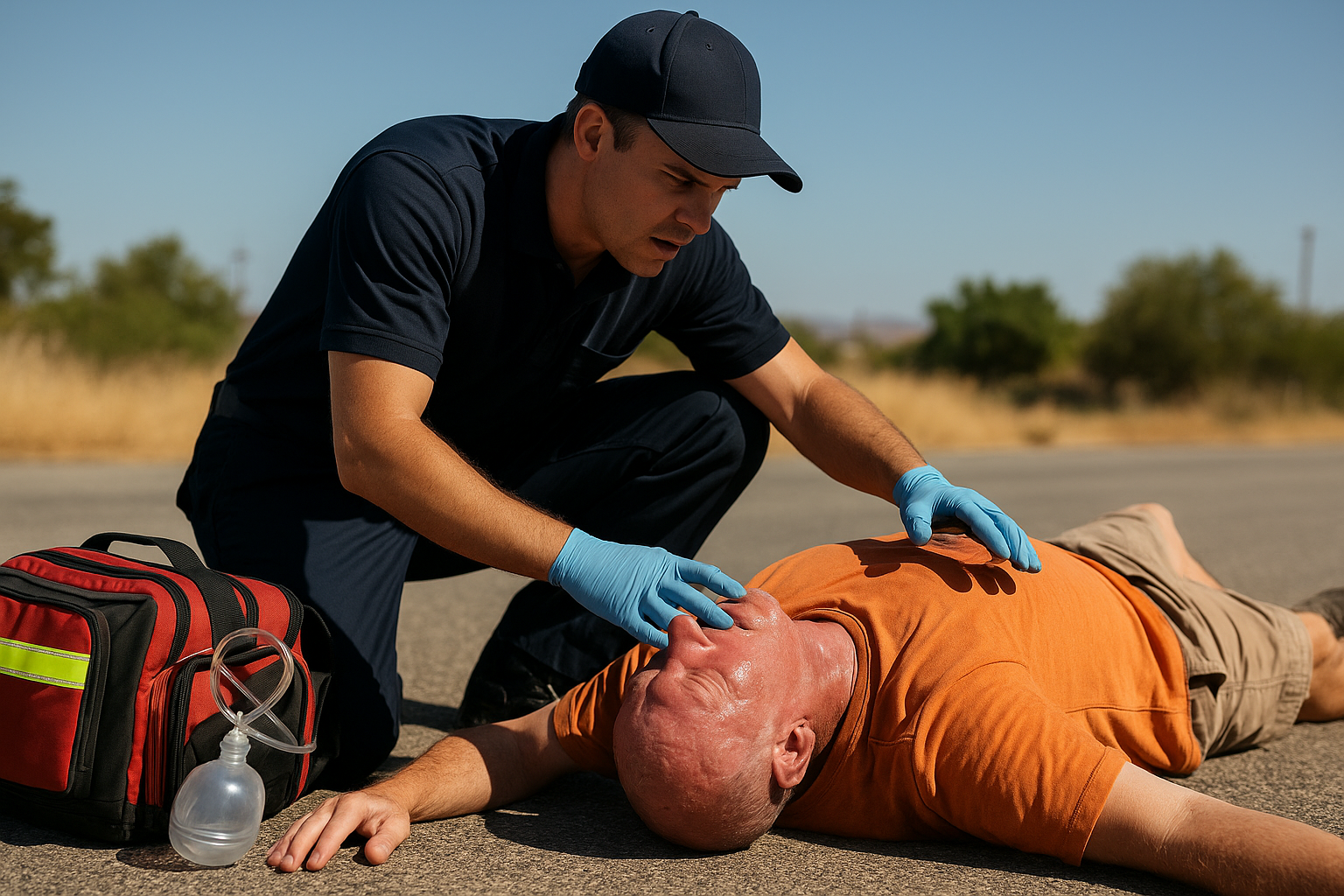
When Texas temperatures soar, so do calls for heat-related emergencies. For EMS providers, preventing and treating heat stroke isn’t just a seasonal concern—it’s a recurring challenge that tests clinical skills, situational awareness, and operational preparedness. Whether you’re a seasoned medic or new to the field, understanding how to navigate the intense Texas heat can mean the difference between life and death for your patients.
In this blog post, we’ll break down the science of heat stroke, outline EMS protocols for managing it in the field, and share tips to help you prevent heat-related complications for both patients and responders.
Understanding Heat Stroke in Texas
Heat stroke is a medical emergency. It’s the most severe form of heat illness, often following less serious conditions like heat cramps or heat exhaustion. Defined by a core body temperature exceeding 104°F (40°C) and accompanied by central nervous system dysfunction, heat stroke can rapidly become fatal if not addressed immediately.
In Texas, where summer temperatures regularly exceed 100°F, EMS calls for heat stroke spike, particularly among vulnerable populations such as the elderly, outdoor laborers, athletes, and those without access to air conditioning. Urban heat islands, limited hydration, and high humidity only compound the risk.
Signs and Symptoms EMS Providers Must Recognize
Recognizing the signs early is critical when preventing and treating heat stroke. Unlike heat exhaustion, which may present with profuse sweating, heat stroke often results in dry, hot skin due to thermoregulatory failure. Here are key indicators:
-
Altered mental status: confusion, agitation, slurred speech, seizures, or coma
-
High body temperature (>104°F)
-
Tachycardia and hypotension
-
Hot, dry skin (although sweating may still be present in some exertional cases)
-
Nausea and vomiting
-
Rapid, shallow breathing
Always consider the patient’s environment. Was the individual exerting themselves outdoors? Are they living without air conditioning? Context can help validate your clinical suspicions.
First Steps in the Field: EMS Management of Heat Stroke
Once heat stroke is suspected, rapid intervention is crucial. Every second counts. The priorities in the field include:
1. Rapid Cooling
This is the single most important treatment for heat stroke. Techniques include:
-
Cold-water immersion: If feasible, immerse the patient in an ice bath. This method has been shown to reduce core temperature fastest.
-
Evaporative cooling: Remove clothing, spray the patient with cool water, and fan continuously.
-
Ice packs: Apply to the axillae, groin, neck, and the back of the knees.
-
Chilled IV fluids: If your service allows, consider administering refrigerated saline.
2. Airway and Oxygenation
Due to altered mental status, these patients may need airway protection. Administer high-flow oxygen and be prepared for rapid sequence intubation if airway compromise is imminent.
3. Hydration and Circulation
While oral fluids are not appropriate for patients with heat stroke due to their mental status, IV fluids are essential to correct volume depletion and support circulation. Avoid overhydration, and monitor for signs of pulmonary edema.
4. Monitor for Complications
Heat stroke can cause multi-organ failure. Watch for:
-
Rhabdomyolysis
-
Renal failure
-
DIC (disseminated intravascular coagulation)
-
Hepatic injury
-
Electrolyte imbalances
Early recognition of these complications can guide transport decisions and hospital notifications.
Heat Stroke vs. Heat Exhaustion: Know the Difference
EMS professionals often encounter both conditions during summer shifts. So, how can you distinguish between them?
| Criteria | Heat Exhaustion | Heat Stroke |
|---|---|---|
| Mental status | Alert but fatigued | Altered: confusion, seizures, coma |
| Skin | Cool, moist | Hot, dry (or still sweating) |
| Core temperature | <104°F | >104°F |
| Sweating | Present | Often absent (classic); may persist (exertional) |
| Immediate danger? | Not usually | Life-threatening |
Making this distinction quickly and accurately is a vital step in preventing and treating heat stroke.
Special Populations: Who’s at Risk?
While anyone can fall victim to the heat, certain groups warrant extra attention:
-
Children: They thermoregulate less effectively and may not recognize the signs of overheating.
-
Elderly individuals: Age-related changes, chronic illnesses, and medications (such as diuretics or beta-blockers) increase vulnerability.
-
Outdoor Workers: Construction crews, landscapers, and oil field employees are high-risk groups in Texas.
-
Athletes: Especially during two-a-days, track meets, or football practices in July and August.
-
Low-income or unhoused individuals: Lack of access to air-conditioned spaces makes this population more susceptible.
As EMS providers, we not only treat these individuals—we often serve as the last line of defense between life and death. Recognizing risk is part of prevention.
Prevention Starts with Us
Although treatment is critical, preventing and treating heat stroke go hand in hand with community outreach and personal vigilance.
Tips for Prevention in the Field:
-
Stay hydrated: Carry and drink water or electrolyte solutions regularly.
-
Wear protective yet breathable clothing: Moisture-wicking uniforms and wide-brimmed hats can help reduce the risk.
-
Rest in shaded or air-conditioned areas: Especially during high heat index days.
-
Know your limits: Even fit responders are not immune to heat injury.
-
Use buddy systems: Monitor your partner and speak up if something doesn’t feel right.
-
Educate your patients: Encourage use of fans, hydration, and early recognition of heat illness signs during wellness checks.
Texas-Specific EMS Challenges with Heat
The Lone Star State presents unique operational challenges when responding to heat-related calls:
-
Rural response times: Delays in care can worsen patient outcomes.
-
High-volume events: Rodeos, music festivals, and summer fairs often require EMS standby and heat mitigation plans.
-
Mobile command units without climate control: Heat stroke can also affect responders.
-
Cultural considerations: Some populations may be hesitant to call 911 until late in the illness due to cost or mistrust.
Adapting protocols to meet these challenges is part of an EMS provider’s duty, and ultimately enhances patient care.
A Look Ahead: Innovations in Heat Stroke Care
Recent innovations are reshaping how we approach preventing and treating heat stroke in prehospital settings:
-
Portable immersion systems: Some EMS agencies now carry foldable cold-water tubs for field use.
-
Core temperature monitors: Non-invasive options, such as zero-heat-flux sensors, allow for accurate tracking en route to the hospital.
-
Data analytics: Heat maps and call data are being utilized to predict high-risk areas and enhance the pre-positioning of units.
As Texas faces more frequent and intense heat waves due to climate change, these tools will only grow in importance.
Final Thoughts
In EMS, no two shifts are alike—but Texas heat will always keep us on our toes. From July football practices to August construction zones, the threat of heat stroke is real and constant. By knowing the signs, acting fast, and educating our communities, we can save lives and prevent tragedy.
More importantly, when EMS professionals know how to protect themselves as well as their patients, we ensure that our system stays resilient under pressure.
Call to Action
Want to learn more about how to become an EMT and make a difference in your community? At Texas Rescue Med, we train the next generation of lifesavers to meet challenges just like these head-on.
🚑 Visit www.texasrescuemed.com to explore our courses and apply today!
Sources:
-
CDC. (2024). Heat-Related Illnesses. Centers for Disease Control and Prevention. https://www.cdc.gov/disasters/extremeheat/faq.html
-
Casa DJ et al. (2015). The Inter-Association Task Force for Preventing Sudden Death in Collegiate Conditioning Sessions. NATA Journal.
-
American College of Emergency Physicians. (2023). Prehospital Management of Heat Stroke.
Related Articles:
BLS vs. ALS: Understanding the Critical Differences in Emergency Medical Care
Act FAST: How to Recognize and Respond to Stroke Symptoms in the Field
Check us out on Facebook!
Check us out on Instagram!