Introduction
When it comes to medical emergencies, few conditions are as time-sensitive as a stroke. The ability to recognize the signs early and take immediate action can mean the difference between recovery and long-term disability—or even life and death. EMS providers and the general public alike must be well-versed in identifying stroke symptoms and using the FAST assessment, a simple yet highly effective tool for early recognition.
Understanding Stroke
A stroke occurs when the blood supply to part of the brain is interrupted or reduced, depriving brain tissue of oxygen and nutrients. This can happen due to a blockage (ischemic stroke) or a ruptured vessel (hemorrhagic stroke). Without prompt medical intervention, brain cells begin to die within minutes, making rapid assessment and transport to a stroke center crucial.
The FAST Assessment: A Lifesaving Acronym
The FAST assessment is widely used by EMS professionals, healthcare providers, and the general public to quickly identify a stroke. It stands for:
- F – Face Drooping: Ask the person to smile. Does one side of their face droop or appear uneven?
- A – Arm Weakness: Ask them to raise both arms. Does one arm drift downward?
- S – Speech Difficulty: Ask them to repeat a simple sentence. Is their speech slurred or difficult to understand?
- T – Time to Call 911: If any of these signs are present, call emergency services immediately.
Since stroke treatments are time-sensitive, every minute counts. The faster EMS can recognize and transport a stroke patient to an appropriate facility, the better their chances of recovery.
Beyond FAST: Other Stroke Symptoms
While FAST covers the most common stroke symptoms, additional signs may also indicate a stroke, including:
- Sudden confusion or difficulty understanding speech
- Severe headache with no known cause
- Dizziness, loss of balance, or trouble walking
- Sudden loss of vision in one or both eyes
- Numbness or weakness in the legs
Recognizing these symptoms is especially crucial for EMS providers performing a field assessment when the classic FAST signs may not be present.
Prehospital Stroke Management for EMS Providers
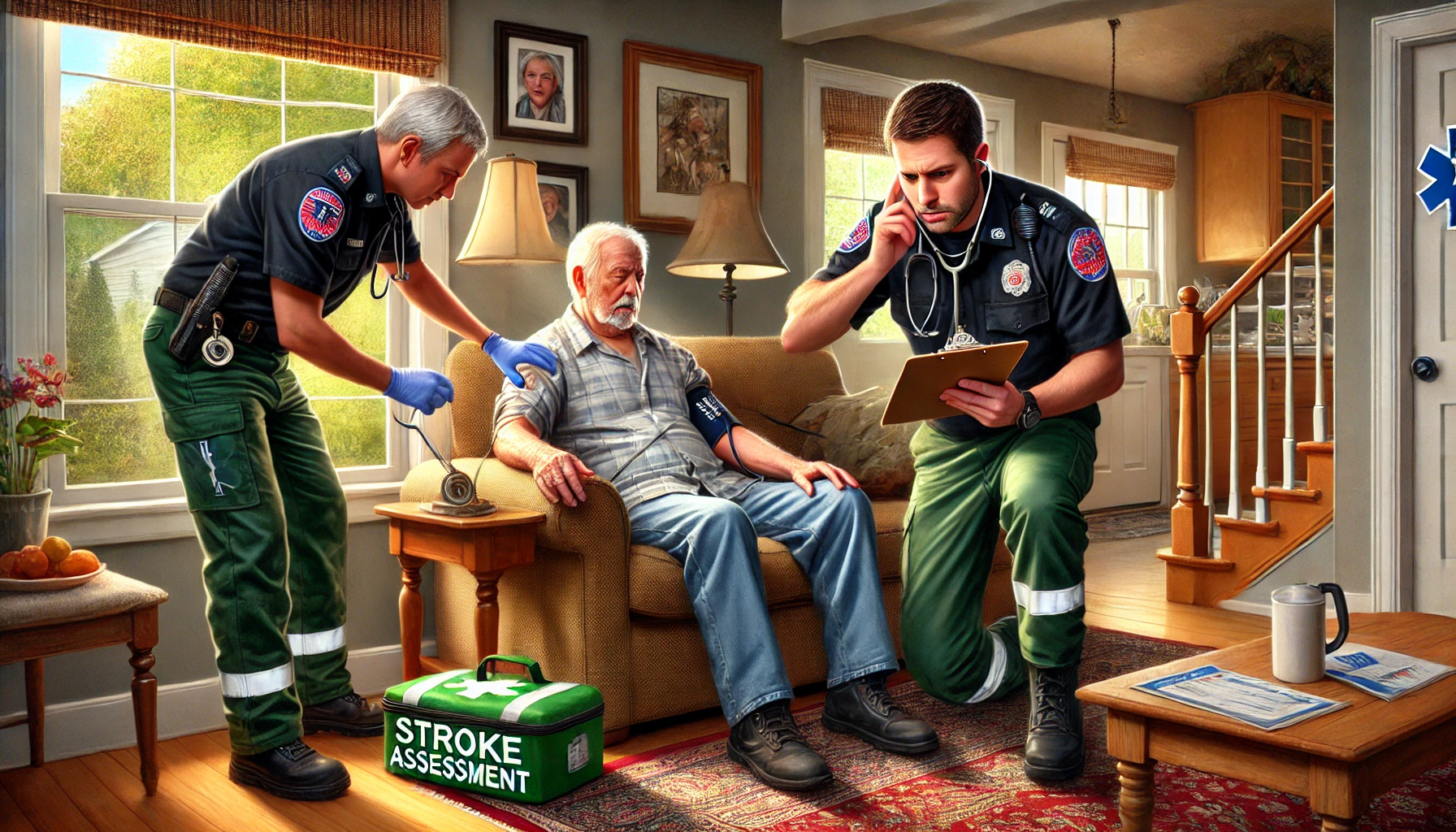
EMS professionals play a critical role in stroke care. Once a stroke is suspected, they should:
- Perform the FAST assessment and document findings
- Establish the time of symptom onset, as this determines eligibility for thrombolytic therapy
- Check blood glucose levels to rule out hypoglycemia mimicking a stroke
- Monitor vital signs and oxygen levels
- Alert the nearest stroke-ready hospital to prepare for rapid evaluation and treatment
The Importance of Stroke Centers
Not all hospitals are equipped to handle stroke patients effectively. EMS providers should be aware of the closest Primary Stroke Centers (PSC) or Comprehensive Stroke Centers (CSC) to ensure rapid intervention. Advanced facilities can offer clot-busting medications like tPA (tissue plasminogen activator) or mechanical thrombectomy procedures to restore blood flow in ischemic strokes.
Public Education and Stroke Awareness
EMS providers respond to strokes and have a role in public education. Many communities run stroke awareness campaigns emphasizing the FAST acronym and encouraging early activation of 911 services. Teaching the public to recognize stroke symptoms and take immediate action can save lives before EMS even arrives.
Conclusion
A stroke is a medical emergency that demands swift action. By using the FAST assessment, EMS providers and bystanders alike can recognize early signs of a stroke and ensure patients receive timely treatment. For EMS professionals, understanding additional stroke symptoms, prehospital management protocols, and the importance of transport to the appropriate stroke center can significantly improve patient outcomes. Time is brain—act FAST!
For more in-depth EMS training and certification courses, visit Texas Rescue Med and enhance your expertise in prehospital stroke care today.
Follow us on Facebook!
Follow us on Instagram!
Related Articles:
BLS vs. ALS: Understanding the Critical Differences in Emergency Medical Care
Geriatric Emergencies: Essential Strategies for EMS Professionals